
When the Weather Changes, the Design Should Still Feel Intentional
A wedding plan can change in a matter of minutes. The experience should never feel as though it did.
For a recent private wedding at Andaz Miami Beach, the original ceremony was designed for an outdoor setting. As the wedding day approached, weather conditions required a last-minute move indoors, shifting the ceremony into a hotel ballroom and changing the visual context of nearly every design decision.
Temporary Tropics had been contracted to provide live foliage rentals, tropical floral design and wedding drapery for the ceremony and reception. When the location changed, those three elements became more than décor. Together, they gave the new indoor spaces structure, softness and a sense of intention.
The result was not an outdoor wedding relocated into a ballroom. It became a wedding environment newly considered for the room.
Designing Through a Last-Minute Indoor Ceremony Change
Outdoor wedding décor often relies on the setting itself. Natural light, architecture, water views and landscape already provide atmosphere. A ballroom requires a different approach.
Once the ceremony moved indoors, the design needed to accomplish several things quickly: establish a clear ceremonial entrance, define the altar, soften the surrounding walls and make the ballroom feel connected to the tropical character of the original vision.
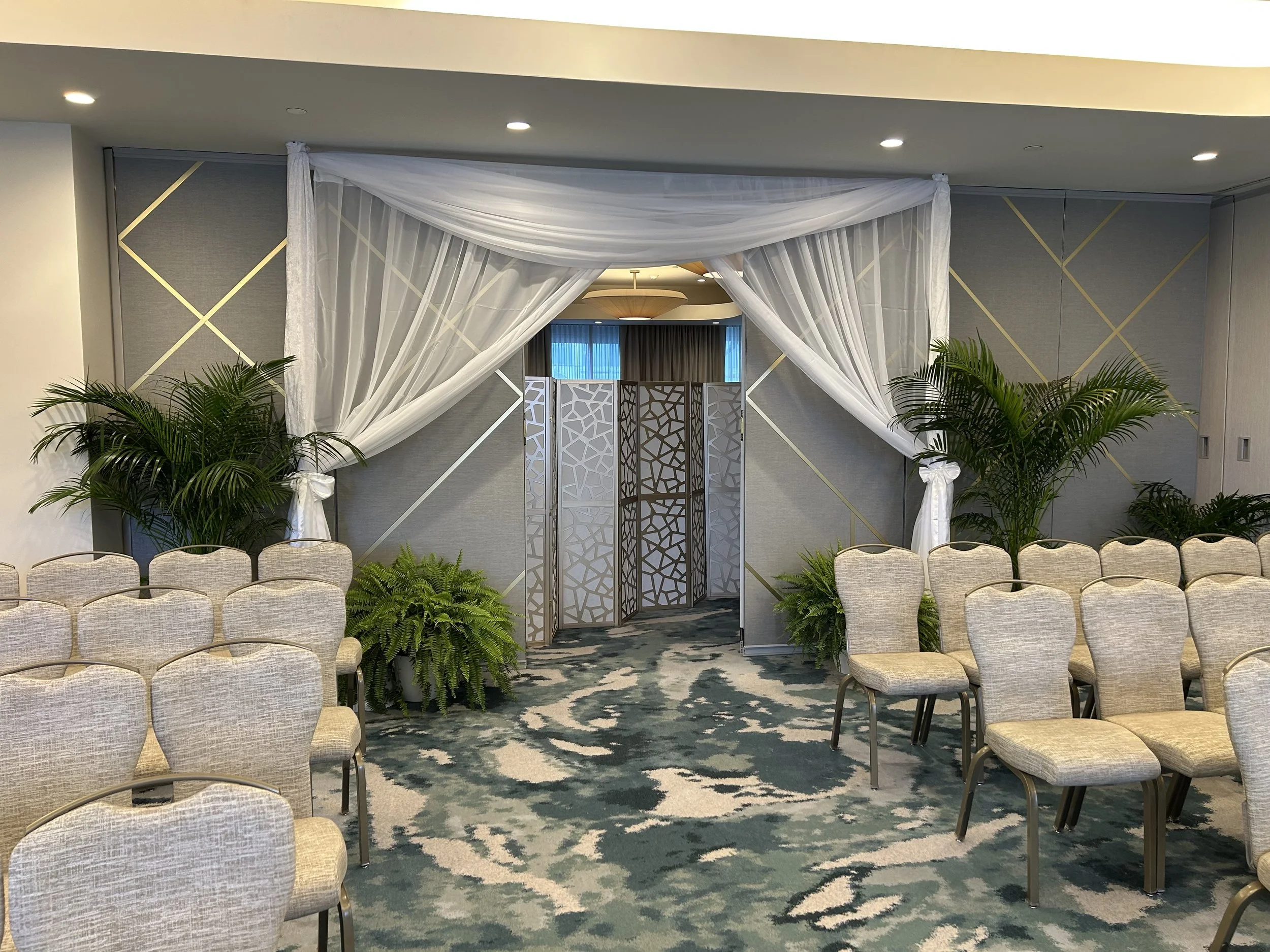
The drapery originally intended for the outdoor ceremony was reimagined inside. Rather than treating it as an unusable element from the former plan, our team used it to dress the ballroom walls and create two of the ceremony’s most important visual moments.
One draped installation framed the bride’s entrance, giving her arrival a clear sense of occasion. Another became the altar backdrop, adding softness and movement behind the ceremony while helping conceal the more functional architectural elements of the ballroom.
This is one of the most valuable qualities of well-selected wedding décor: it can be adapted.
Drapery is not limited to one purpose. It can frame an entrance, soften a wall, define a ceremony structure, conceal service areas or create a backdrop for vows and photographs. When chosen thoughtfully, it gives planners and couples flexibility without sacrificing visual continuity.
How Live Foliage Gave the Ballroom Scale and Warmth
Live foliage became the natural bridge between the original outdoor plan and the new indoor ceremony setting.
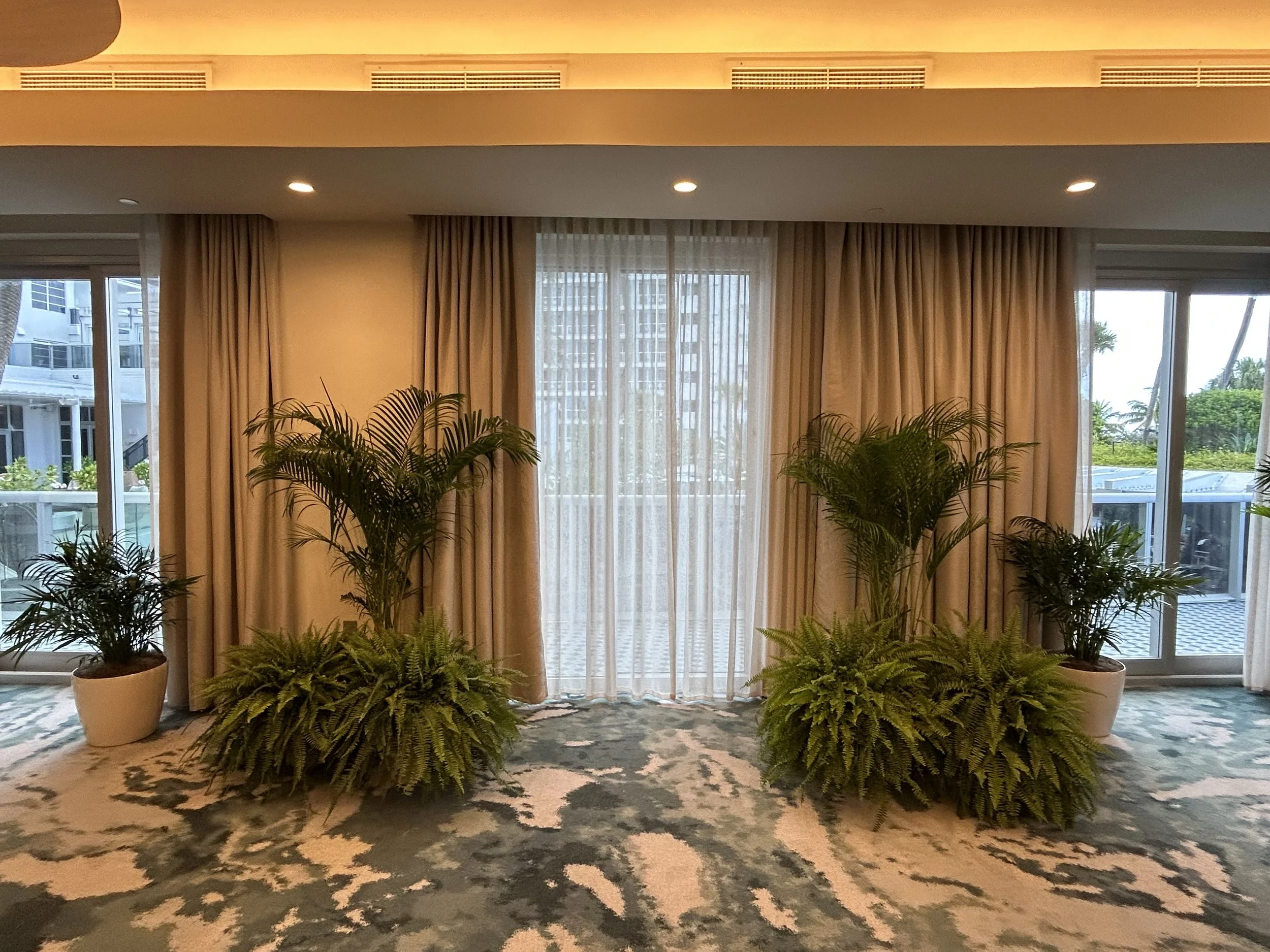
Tall palms were positioned around the ceremony space to introduce height and frame the drapery, while lush Boston ferns softened the floor line and created fuller botanical groupings. The plants helped transform the ballroom from a neutral meeting space into a warmer wedding environment with tropical movement and depth.
The foliage was not used simply to fill empty corners. Every plant was placed to support the composition of the room.
Larger palms created vertical structure. Ferns grounded the arrangements and concealed the transition between containers, flooring and drapery. Smaller palms helped carry the botanical language into secondary areas, ensuring the design did not feel concentrated in only one location.
For Miami Beach weddings, live plants are especially effective because they allow an indoor venue to retain a connection to the destination. Palms, ferns and layered tropical greenery feel authentic to the setting while remaining elegant enough for a formal ceremony.
Three Elements, One Cohesive Wedding Design
Foliage, florals and drapery each serve a different purpose.
Drapery changes the architecture. It softens surfaces, creates movement and defines focal points.
Live foliage gives the room scale, natural texture and volume. It can frame large areas without making the design feel dense or overly floral.
Fresh florals provide color, detail and intimacy. They draw the eye toward the tables, ceremony moments and personal elements of the wedding.
When these three elements are designed together, even a relatively restrained collection can have a significant effect on the room.
This wedding demonstrated that high-impact wedding décor does not always require every surface to be filled. Strategic placement is often more important than quantity. A well-framed entrance, a thoughtful altar backdrop, balanced perimeter foliage and carefully designed centerpieces can shape the entire Client and guest experience.
Tropical Wedding Florals with a Refined Point of View
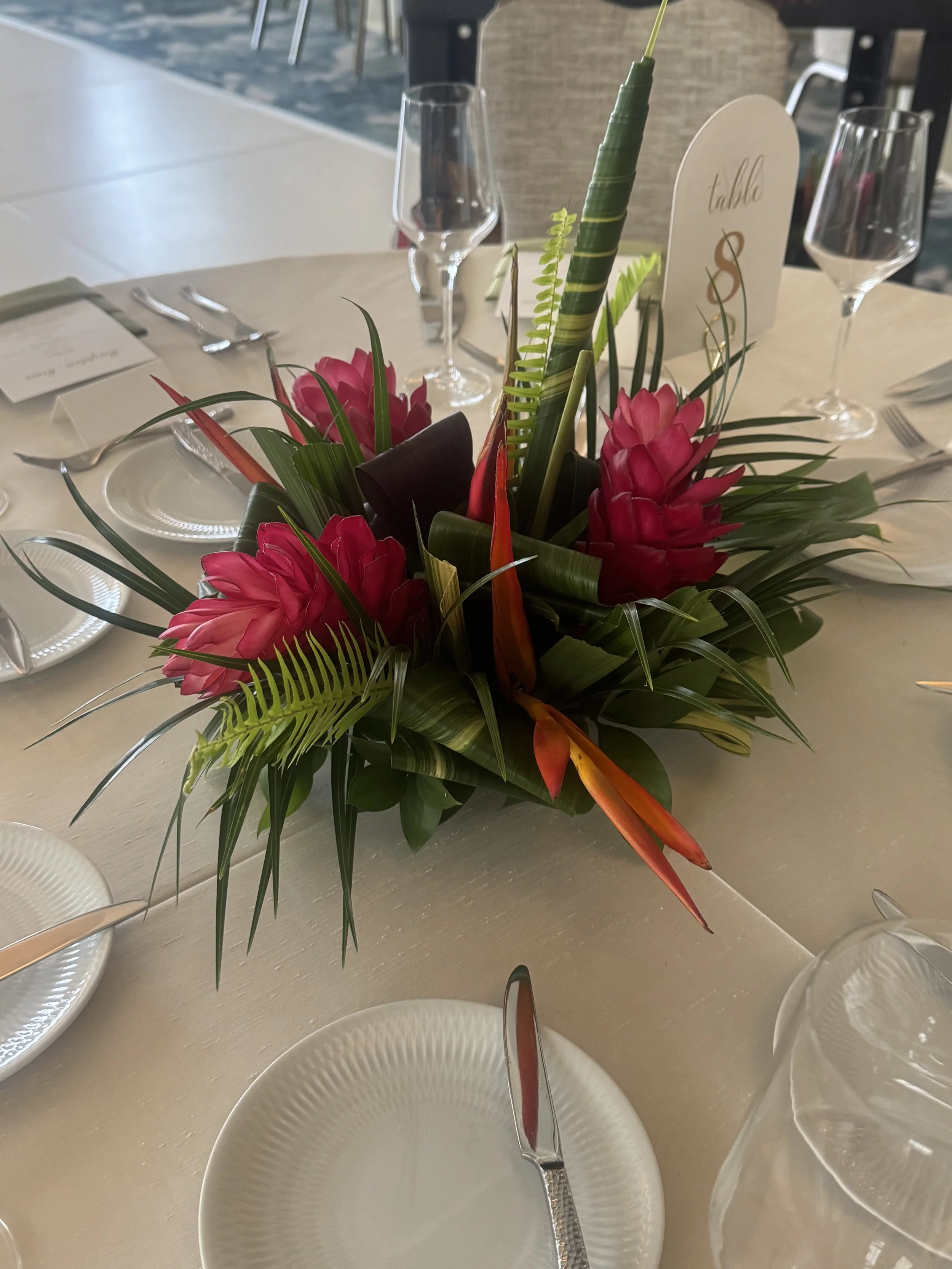
The reception centerpieces combined vivid tropical florals with layered greenery. Pink ginger, heliconia, palm leaves and fern textures introduced saturated color while remaining grounded in the tropical setting.
The arrangements were full enough to feel celebratory but controlled enough to preserve visibility and conversation across the table.
That balance matters.
Wedding centerpieces should contribute to the atmosphere without interrupting the experience of the guests seated around them. Height, width and density must be considered alongside glassware, place settings, table numbers and sightlines.
The floral palette brought energy to the reception while the surrounding greenery kept the composition natural and sophisticated. Rather than introducing unrelated colors or forms, the flowers worked within the language established by the ceremony foliage.
Extending the Design into the Reception
The botanical design continued throughout the reception so the wedding felt cohesive from one space to the next.
Live plants were installed around the perimeter of the ballroom, adding softness to the room’s edges and helping break up long stretches of wall. The sweetheart table was accented with foliage and lanterns, creating a more intimate visual setting for the bride and groom without separating them from the broader reception design.
Lighting was woven throughout the plant groupings, adding warmth and allowing the foliage to remain visible as the room transitioned into the evening.
This is an important consideration for ballroom wedding décor. Plants that appear full and dimensional during daylight can disappear under low event lighting unless illumination is planned intentionally. Accent lighting helps reveal the shape of the leaves, creates shadow and gives the installation greater depth after sunset.
For the sweetheart table, the combination of plants, lanterns and warm light created atmosphere without relying on an oversized backdrop. The design remained romantic, refined and connected to the rest of the room.
Creating a Botanical Photo Moment for Cocktail Hour
The cocktail space was defined with drapery and live plants to create a dedicated photo opportunity.
A successful wedding photo moment should feel like part of the environment, not an isolated prop placed against a wall. The drapery gave the area a polished background, while the foliage added dimension and connected it visually to the ceremony and reception.
This gave guests a natural place to gather, photograph and engage during cocktail hour while the room transition continued elsewhere.
For hotels and ballroom weddings, creating a designated photo area can also protect other parts of the event design. Rather than guests improvising photographs near service doors, registration tables or crowded pathways, the designed moment gives them a clear and visually consistent setting.
Using Available Materials with Purpose
As the indoor design evolved, our team used palm fronds from the existing foliage to create additional arrangements in vases.
These improvised botanical accents helped fill newly identified areas and ensured the relocated wedding space felt complete. Because the fronds came from the same plant palette already used throughout the event, the additions felt intentional rather than last-minute.
This is where experience matters.
A flexible event partner should be able to assess the room, understand what feels visually unfinished and make adjustments using the materials already available. Thoughtful improvisation is not about adding décor without direction. It is about recognizing how to extend the design language without disrupting it.
The palm-leaf arrangements gave the space added height and movement while making efficient use of the botanical materials onsite.
The Final Bouquet, Delivered with Minutes to Spare
Approximately one hour before the wedding, the wedding party requested an additional bouquet.
Our team responded immediately and completed the bouquet with roughly 15 minutes remaining before it was needed.
Wedding production often includes requests that cannot be anticipated in the original proposal. A missing personal floral, a last-minute seating adjustment or a changed ceremony location can place pressure on the timeline. The role of an experienced wedding floral and décor team is not only to deliver the original scope, but to remain composed and resourceful when the day changes.
The additional bouquet was not treated as an inconvenience. It was treated as part of caring for the wedding.
That is the level of service a couple should feel on the day itself: calm, capable and solution-oriented.
Why Minimal Wedding Elements Can Still Create Major Impact
Couples often assume that transforming a hotel ballroom requires an extensive inventory of unrelated decorative elements. In reality, a few carefully selected categories can shape the room more effectively than a large volume of disconnected décor.
Live foliage provides scale.
Florals introduce color and personal expression.
Drapery changes the architecture and defines the most important moments.
Lighting gives all three greater depth.
When these elements are coordinated, they can support the ceremony, cocktail hour and reception while maintaining one visual story throughout the wedding.
This approach also helps extend the value of the wedding design. Drapery may be repurposed from ceremony to reception. Plants can frame the altar, then continue into the cocktail space or ballroom. Palm leaves can be used in centerpieces, vases and smaller arrangements. Lanterns may move from an aisle or ceremony vignette to the sweetheart table.
The objective is not simply to spend less. It is to make each design element work more intelligently.
Planning for the Weather Without Designing for Fear
Weather contingency planning is essential for Miami Beach weddings, particularly during seasons when conditions may shift quickly.
A strong indoor backup plan should be discussed before the wedding day. This does not mean designing two completely separate events. It means selecting adaptable elements and understanding how they can be repositioned if the ceremony location changes.
Helpful questions include:
Can the ceremony drapery be installed indoors?
Can the altar foliage be separated into smaller groupings?
Will the plant heights work within the ballroom ceiling?
Can ceremony plants transition into the reception?
Is there a secondary location for the photo moment?
Which florals can be repurposed after the ceremony?
Is there enough time and labor within the production schedule to support a venue change?
The purpose of a rain plan is not to remove every challenge. It is to prevent the design from becoming an afterthought when the venue decision is made.
Professional Wedding Installation Inside a Miami Beach Hotel
Hotel weddings require a particular level of operational awareness.
Load-in schedules, service corridors, elevators, ballroom access, guest movement, venue rules and compressed setup windows all influence how the installation must be managed. When a weather call changes the room plan, those logistics become even more complex.
Temporary Tropics is experienced in maneuvering through hotel environments while maintaining a discreet and organized installation process. Our team coordinates delivery, placement, styling and final adjustments with attention to both the design and the operational needs of the venue.
The plants arrive healthy, hydrated, groomed and presentation-ready. The florals are styled onsite. Drapery is adjusted to the architecture of the room. Every element is then reviewed from the perspective of the guest entrance, ceremony sightline and photography.
The work is not complete when the items enter the ballroom. It is complete when the environment feels resolved.
Guiding the Couple Through the Design Process
The bride and groom were supported throughout the design process so the choices felt cohesive, practical and aligned with their wedding vision.
That guidance becomes especially important when circumstances change. Couples should not be expected to redesign a ballroom on their wedding day. They need professionals who can interpret the original intention and translate it into the new setting.
Our responsibility was to protect the feeling of the wedding, even though the location had changed.
The ceremony still needed softness. The reception still needed warmth. The bride’s entrance still needed significance. The photographs still needed thoughtful backgrounds. The wedding party still needed responsive floral support.
Every adjustment was made with those experiences in mind.
A Wedding That Felt Designed, Not Relocated
The weather changed the location, but it did not diminish the wedding.
Through live foliage rentals, tropical floral design, wedding drapery and carefully placed lighting, the indoor spaces were transformed into a cohesive ceremony and reception environment. The palms and ferns brought the destination indoors. The drapery softened the ballroom and framed the most emotional moments. The florals introduced color and intimacy. The last-minute botanical arrangements and additional bouquet ensured the final details felt complete.
This is what thoughtful wedding design should do.
It should remain beautiful when the plan changes. It should make intelligent use of every element. It should support the couple without adding pressure. And it should allow guests to experience the celebration without ever seeing the complexity behind it.
Trust us to help extend the value of your wedding décor through strategic, adaptable and carefully considered design.
Nature, Curated. Experiences, Elevated.