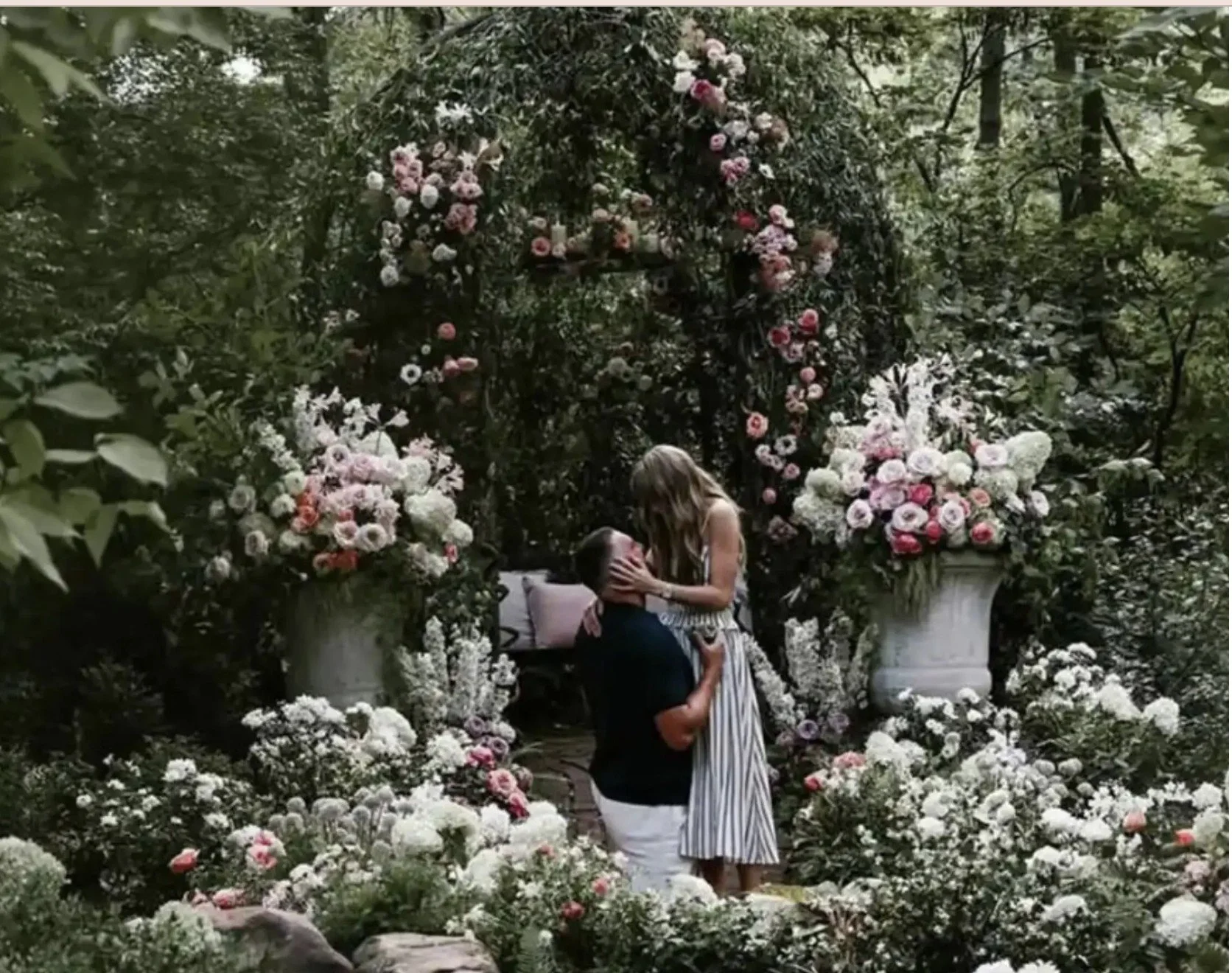

Taylor Swift’s Secret Garden Wedding: How to Recreate the Live Foliage Look for Florida Weddings
Editorial Note: Temporary Tropics did not design or provide the botanical décor for Taylor Swift and Travis Kelce’s wedding and is not affiliated with the couple, Madison Square Garden or the event’s production team. This independent design analysis is based on publicly available reporting. Exact botanical specifications have not been released, so no unverified plant species or measurements are presented as confirmed facts.
On July 3, 2026, Taylor Swift and Travis Kelce exchanged vows at Madison Square Garden in New York City. The wedding transformed one of the world’s most recognizable arenas into an intimate, garden-inspired environment that reportedly felt far removed from the venue’s familiar sports and entertainment identity. The marriage and Madison Square Garden ceremony were confirmed publicly following the celebration.
The most compelling detail for wedding designers was not simply the number of flowers used. It was the way botanical design changed the perceived architecture of the arena. Guests entered an environment described as a whimsical secret garden, with forest-like sections containing trees, ferns, real flowers and layered greenery. White coverings, fabric treatments and garden-inspired scenic elements helped conceal the visual language of the arena and create a softer, more immersive setting.
Advance reporting documented artificial trees and ceiling fabric being installed as part of the garden-themed transformation. This suggests the wedding used a hybrid botanical design: real flowers and natural greenery combined with large-scale scenic trees and fabricated architectural elements. The exact percentage of live versus faux plant material has not been released, and the specific tree and fern species used inside the venue remain private.
That distinction is important.
The design did not succeed because every element was necessarily living. It succeeded because the live flowers, real greenery, theatrical trees, ground-level foliage, fabric, lighting and scenic construction worked together convincingly. The finished environment felt alive, even where extraordinary height required fabricated materials.
For Florida weddings, this approach is especially relevant. Our state already possesses a rich botanical language through mature tropical trees, palms, broad-leaf foliage, orchids, citrus, flowering plants, ferns, gardens and resort landscapes. A Taylor Swift–inspired secret garden in Florida should not attempt to copy a New York arena literally. It should translate the wedding’s central design principles into live plant material that feels natural to Miami, Fort Lauderdale, Palm Beach, Boca Raton, Orlando, Naples, Marco Island, Tampa, Sarasota or the Florida Keys.
What Was Publicly Confirmed About the Wedding Foliage
A complete botanical order has not been published. No reliable source has released the exact tree species, fern varieties, nursery-container sizes, plant heights or total quantity of foliage installed throughout Madison Square Garden.
What has been confirmed is the overall botanical structure.
The wedding featured a secret-garden concept with forest-like areas containing trees, ferns, flowers and lush greenery. The arena was transformed with large scenic tree elements, ceiling fabric and extensive garden-inspired décor. Reports also described rose-garden influences, dense shrub-like forms, oversized blooms and an environment in which much of Madison Square Garden’s permanent architecture was visually concealed.
The monumental tree structures appear to have been theatrical rather than fully living trees. Their precise dimensions have not been released. Some attendee descriptions characterized them as extraordinarily tall illuminated trees, but no verified production specification has established their actual height.
The ferns were repeatedly described as an important part of the environment, particularly within the lower botanical layer. Their exact varieties and quantities remain unknown.
Real flowers were used throughout the wedding, but the complete floral recipe remains private. The only floral varieties that have been reliably identified are those appearing in the publicly photographed bouquet caught by a guest after the bouquet toss.
The bouquet appeared to include pale-pink Sweet Pea and Queen Anne’s Lace. The loose, delicate flowers created a romantic garden composition rather than a dense, highly structured bouquet.
The responsible design takeaway is therefore not a claim that a particular species appeared inside the wedding. It is an understanding of the botanical hierarchy the design created and how that hierarchy can be recreated using premium live foliage rentals available in Florida.
Why the Secret Garden Design Worked
The transformation succeeded because the trees, ferns, flowers and greenery were arranged as an ecosystem rather than as isolated decorations.
The first layer was the canopy. Towering trees changed the perceived height and scale of Madison Square Garden, drawing the visual ceiling downward and making an enormous arena feel more intimate. A canopy creates the impression that guests are standing beneath a landscape rather than inside a decorated room.
The second layer was the understory. Medium-height trees, palms, foliage and shrub-like botanical forms connected the overhead tree canopy to the ground. Without this middle layer, tall trunks can appear like separate props standing on a ballroom floor. The understory gives the environment visual continuity.
The third layer was the ground plane. Ferns, moss, bushes, low greenery and grass-style scenic flooring concealed structural bases and softened the place where the botanical environment met the venue floor. This layer made the trees appear rooted within a landscape rather than weighted inside temporary structures.
The fourth layer was the floral composition. Flowers introduced color, delicacy and romance. The publicly identified Sweet Pea and Queen Anne’s Lace suggest a loose, meadow-like floral sensibility: soft, gestural and garden-inspired rather than rigidly symmetrical.
The final layer was architectural scenery. Drapery, fabric, garden structures, trees, furniture and custom scenic pieces created individual spaces within the larger arena. The foliage was not expected to perform every structural role independently. Botanical material and fabrication worked together to reshape the venue.
This layered approach is the foundation of immersive biophilic wedding design.
The Florida Live Foliage Palette for Recreating the Look
Temporary Tropics can recreate the atmosphere of the secret-garden wedding using Florida-appropriate live trees, palms, tropical foliage, ferns, hedge walls, moss and fresh floral enhancements.
The species below are not presented as the undisclosed plants used at Taylor Swift’s wedding. They are the live foliage rentals we recommend for producing a comparable sense of botanical scale, layering and romance within Florida hotels, resorts, private estates, gardens, ballrooms and wedding venues.
Final species and heights are always subject to nursery availability, venue clearance, loading access, decorative planter selection and the environmental conditions of the installation.
Live Canopy Trees: Approximately 8 to 16 Feet
The canopy trees establish height, create overhead movement and help a ballroom or tent feel less architectural.
Black Olive or Shady Lady Trees can be sourced at approximately 10 to 16 feet. Their branching structure and layered foliage create a broad canopy suitable for indoor forests, large ballrooms, estate weddings and immersive entrances.
Ficus Audrey Trees generally work beautifully at approximately 8 to 14 feet. Their leaves are softer and more refined than some traditional Ficus varieties, making them appropriate for luxury hotels, Palm Beach weddings and elegant garden environments.
Ficus Alii Trees can be sourced at approximately 8 to 14 feet. Their narrower leaf form and more controlled canopy make them useful beside stages, within aisles and in areas where height is needed without excessive width.
Ficus Benjamina Trees are effective at approximately 8 to 14 feet. Their familiar branching structure and full green canopy create the appearance of an established indoor tree and work especially well in enchanted-forest environments.
Olive Trees generally range from approximately 7 to 12 feet for event use. Their lighter, airier canopy preserves sightlines and creates a romantic Mediterranean, countryside or quiet-luxury aesthetic.
These live trees can be supplemented with custom scenic trees where a wedding requires an overhead canopy beyond the height available from transportable living specimens.
Architectural Trees and Palms: Approximately 7 to 14 Feet
Architectural trees and palms create the principal vertical layer beneath the canopy.
Kentia Palms can be sourced at approximately 8 to 14 feet. Their graceful fronds and refined silhouette are ideal for luxury resorts, private estates, oceanfront weddings and sophisticated indoor garden environments.
Majesty Palms can reach approximately 8 to 14 feet and provide meaningful vertical scale in convention hotels, large ballrooms and high-ceilinged venues.
Areca Palms generally range from approximately 7 to 12 feet. Their light, feathery canopies introduce movement and can frame stages, screens, entrances, ceremony structures and ballroom perimeters without becoming visually heavy.
Ficus Lyrata Columns can be used at approximately 7 to 12 feet. Their tall, architectural form and controlled footprint make them effective in narrow locations and modern biophilic wedding designs.
Ficus Lyrata Standards generally range from approximately 7 to 11 feet. Their elevated canopies work especially well behind lounge furniture, around dining environments and beside reception stages because guests can see beneath the foliage.
These plants provide the height needed to make a room feel botanical while remaining realistic to transport, install and maintain within a Florida wedding venue.
The Botanical Understory: Approximately 3 to 8 Feet
The middle layer connects the tall trees to the lower ferns and ground foliage.
Cat Palms generally range from approximately 5 to 8 feet. Their broad, dark-green foliage creates substantial coverage and can conceal ballroom drape, scenic bases, equipment and empty areas beneath taller trees.
Birds of Paradise generally range from approximately 5 to 8 feet. Their sculptural leaves introduce a modern tropical form and work beautifully in contemporary resorts, luxury hotel ballrooms and tropical-fairytale designs.
Monstera Deliciosa generally ranges from approximately 3 to 5 feet. Its recognizable broad leaves create lush tropical texture and can fill visual gaps beneath larger trees.
Philodendron Selloum generally ranges from approximately 3 to 5 feet. Its deeply cut leaves provide volume and movement throughout the middle botanical layer.
This understory is critical. Without it, tall tree trunks and palms can appear disconnected from the ground-level foliage.
Ferns and the Forest Floor: Approximately 18 Inches to 4 Feet
The ground plane conceals planters, ballast, scenic bases and the mechanics required to support large botanical installations.
Macho Ferns generally range from approximately 2 to 4 feet. Their large fronds provide substantial coverage around tree bases, stages and ceremony platforms.
Kimberly Queen Ferns generally range from approximately 2 to 3½ feet. Their upright growth creates a more structured fern layer that works well along aisles, stages and garden pathways.
Boston Ferns generally range from approximately 18 inches to 3 feet. Their softer, cascading foliage creates a romantic forest-floor effect and can provide broad, budget-conscious stage or ceremony coverage.
Preserved moss, living moss accents, natural branches, decorative bark, grasses and carefully selected floral materials can be layered among the ferns to make the installation feel established rather than newly assembled.
Living Architecture and Hedge Walls: Approximately 6 to 10 Feet
An immersive secret garden also requires botanical architecture.
Podocarpus can be sourced at approximately 6 to 10 feet and used to create formal garden structure, living privacy and green architectural lines.
Live, faux or hybrid hedge walls can generally be created at approximately 6 to 10 feet high. They can provide privacy, divide a ballroom, conceal operations, define a ceremony, support dimensional signage or become a living photography backdrop.
The strongest hedge-wall designs often combine a consistent structural base with live tropical foliage and fresh floral enhancements. This hybrid approach provides architectural reliability while preserving the depth and natural variation of living material.
Why a Hybrid Forest Is Often the Best Solution
A literal recreation of the enormous scenic trees reported at Madison Square Garden would not normally rely upon fully living trees. Transporting, supporting, watering and safely installing a 40- or 50-foot living specimen inside a hotel ballroom would be impractical for most venues.
A more intelligent solution is a hybrid forest.
Live trees and palms occupy the areas closest to guests, where natural leaves, real trunks and organic movement matter most. Live ferns, Monstera, Selloum, moss and flowers build the forest floor. Scenic trees or fabricated overhead structures provide the extraordinary canopy height. Fresh florals and live foliage soften the transition between the real and constructed elements.
When executed correctly, guests do not experience the installation as separate materials. They experience one continuous botanical environment.
The bases of scenic trees should be concealed beneath live ferns, tropical plants, moss, branches and flowers. The live and faux foliage should share compatible tones, leaf scales and density. Lighting should create varied, dappled shadows rather than flattening the trees under uniform illumination.
Hybrid botanical design is not a compromise. At this scale, it is often the most convincing, practical and responsible solution.
Seven Florida Wedding Themes Inspired by the Secret Garden
The plant species used to recreate the secret-garden concept can support several very different wedding themes. The foliage does not need to be used in the same way at every property.
The Midsummer Night’s Dream Forest
This interpretation comes closest to the reported atmosphere of the Madison Square Garden wedding.
Black Olive Trees, Ficus Audrey, Ficus Benjamina and mature Ficus Alii can create the primary canopy. Kentia Palms and Ficus Lyrata can fill the spaces between the trees, while Birds of Paradise, Monstera and Selloum form the understory. Macho Ferns, Boston Ferns, moss and natural branches complete the ground plane.
The floral design should feel as though it is growing through the greenery rather than sitting on top of it. Sweet Pea, Queen Anne’s Lace, garden roses, delphinium, larkspur, ranunculus, hydrangea and airy vine material can be woven into the trees, hedge walls and forest floor.
This theme is particularly effective inside large Florida hotel ballrooms, theaters, museums, convention hotels and blank-canvas venues. It transforms the architecture through depth, foliage and light rather than relying upon printed scenic panels.
The English Secret Garden
The English Secret Garden is softer, lighter and more floral.
Olive Trees, Ficus Audrey, Ficus Lyrata Standards, topiaries and Kentia Palms provide the tree layer. Boston Ferns, Kimberly Queen Ferns, herbs and moss establish the garden floor. Pale pink, cream, white and muted lavender florals create a romantic palette.
Hedge walls can form garden rooms, ceremony backdrops, dining environments and escort-card installations. Trellis structures, arches and gazebo forms can be covered with greenery, garden roses and delicate flowering vines.
This interpretation works beautifully for historic hotels, courtyards, private estates and garden venues throughout Palm Beach, Coral Gables, Winter Park, Naples and Sarasota.
The composition should remain cultivated but not mechanically symmetrical. Varied plant heights, soft floral movement and intentional negative space create the feeling of a mature garden.
The Palm Beach Regency Secret Garden
A Palm Beach interpretation combines secret-garden romance with polished Florida glamour.
Kentia Palms, topiaries, citrus trees, orchids, bougainvillea, Ficus Lyrata and glossy tropical foliage provide the botanical structure. White, cream, pink, green and restrained metallic planters reinforce the Palm Beach design language.
Hedge walls can incorporate lattice details, monograms, florals, dimensional signage and carefully controlled lighting. White pebbles, preserved moss and polished stone top dressings give the decorative planters a finished resort presentation.
This theme is ideal for Palm Beach island hotels, Boca Raton resorts, private clubs, oceanfront properties and luxury estates. It preserves the romance of the original secret-garden concept while making the environment distinctly Floridian.
The Old Florida Garden
The Old Florida interpretation feels collected, residential and warm.
Robellini Palms, Kentia Palms, ferns, orchids, citrus trees, bougainvillea, topiaries, woven planters, terracotta, rattan and natural wood can create the environment.
This theme works especially well for welcome dinners, rehearsal celebrations, historic venues, private clubs, waterfront residences and farewell brunches. The plant rentals can be repurposed throughout an entire wedding weekend, moving from courtyard cocktails to the ceremony, ballroom reception and brunch.
Different planter textures and plant heights are appropriate, but the overall palette should remain intentional so the design feels layered rather than mismatched.
The Tropical Fairytale
For Miami, Fort Lauderdale, the Florida Keys, Naples, Marco Island and oceanfront resorts, the secret garden can become unmistakably tropical.
Kentia, Areca and Majesty Palms establish height. Birds of Paradise, Monstera and Selloum create the middle botanical layer. Cat Palms and ferns provide density. Orchids, bougainvillea, mandevilla and loose garden florals add romance and color.
The result should not become a generic jungle. Premium planters, controlled pathways, refined lighting and thoughtfully placed florals keep the design sophisticated and wedding-forward.
White, blush, green, champagne and pale coral can preserve the romantic softness associated with the secret-garden concept while allowing the plant material to reflect Florida’s natural environment.
For beachfront ceremonies, plants should frame the water rather than block it. The denser foliage can then be concentrated inside the reception, where trees, palms and hedge walls soften the ballroom architecture.
The Florida Citrus Garden
The Florida Citrus Garden creates a fresh connection between countryside romance and Florida identity.
Live lemon, lime, orange or calamondin trees can be combined with olive trees, herbs, ferns, white flowers, pale-pink accents, cream planters, terracotta and natural wood.
Citrus trees can frame the ceremony, become part of a living escort display, surround the bar and transition into the reception. They are especially effective for spring weddings, culinary celebrations, resort courtyards, private estates and garden venues.
The design remains romantic when the fruiting trees are paired with Sweet Pea, Queen Anne’s Lace, roses and airy white florals rather than being treated as a literal produce-market theme.
The Modern Biophilic Ballroom
A modern interpretation preserves the botanical architecture while removing the overt woodland references.
Ficus Lyrata Columns, Ficus Audrey, Birds of Paradise, Snake Plants, ZZ Plants, Kentia Palms and structured hedge walls create a clean green-and-white environment.
Planters can be matte white, stone-grey, black, silver or high-gloss lacquer. Ferns and moss soften the bases, while white or pale-blush florals add enough romance to prevent the room from feeling corporate.
This direction is especially appropriate for contemporary Miami Beach hotels, Lake Nona properties, modern museums, rooftop venues and couples who want the emotional effect of a secret garden without creating a literal forest.
Why the Look Works So Naturally for Florida Weddings
Florida weddings frequently move between several environments.
A ceremony may take place on a beach, lawn, terrace or courtyard. Cocktail hour may occur beside a pool or garden. The reception may then move into an air-conditioned ballroom. Live foliage can create continuity among these spaces because many of the same plants can transition through the event while being styled differently.
A pair of live trees may frame the ceremony before moving beside the sweetheart table. Palms from the aisle can reappear around the band or stage. Hedge walls can begin as privacy screening and later become a seating-chart or photography installation. Ferns can soften the ceremony platform before moving to the reception stage.
Repurposing should always be planned before the wedding day. Tree height, canopy width, planter weight, service elevators, door clearances, cart routes, labor and transition timing determine whether a plant can move safely.
A mature 12-foot tree should not be handed informally to banquet staff during cocktail hour. Professional repurposing requires an assigned crew, a protected route and a final installation plan for each location.
Live foliage and floral design should also be developed together. Plants provide environmental scale, architecture, privacy and broad visual coverage. Flowers provide color, delicacy, fragrance and detailed expression.
Using live trees and foliage as the architectural layer allows the Client to reserve premium floral materials for the places where color and detail matter most.
Recreating the Look Without an Arena-Sized Budget
The secret-garden concept can be scaled to several investment levels.
The first approach is a single immersive focal point. Four to six specimen trees, layered ferns, moss, hedge walls and garden florals can transform the ceremony or principal photography area. The remaining spaces can use lighter botanical accents.
The second approach is a connected botanical journey. Live foliage appears at arrival, ceremony, cocktail hour and reception, with selected plants professionally repurposed throughout the event. The celebration feels cohesive without requiring every wall and ceiling to be transformed.
The third approach is a full-room biophilic installation. Live trees form the guest-level canopy, ferns and broad foliage conceal the ground plane, hedge walls reshape the venue and scenic botanical structures extend overhead. This level requires custom fabrication, engineering, substantial labor, extended installation time and close venue coordination.
The most effective budget strategy is not to distribute a limited quantity of small plants thinly throughout a large ballroom. It is to concentrate correctly scaled foliage where it will define the experience: the ceremony, stage, entrance, sweetheart table, dining canopy or primary photography environment.
Outdoor Florida Weddings Require Botanical Engineering
The Madison Square Garden wedding took place inside a controlled arena. Outdoor Florida weddings introduce direct sun, heat, humidity, wind, rain, salt exposure and rapid weather changes.
A Ficus or fern that performs beautifully inside a ballroom may decline under intense afternoon sunlight. Tall trees and hedge walls may require concealed ballast on an oceanfront terrace. Decorative planters require controlled drainage so irrigation does not create wet walking surfaces. Loose moss, bark and stone need to remain contained during wind and rain.
The rain plan must include the foliage.
If the ceremony moves indoors, the trees must fit through the receiving doors and remain proportionate to the backup room. If a lawn becomes saturated, heavy carts may not travel safely across it. A broad outdoor hedge-wall installation may need to be reconfigured rather than forced unchanged into a smaller ballroom.
Professional biophilic wedding design does not end with selecting a beautiful plant. It considers how the plant will arrive, perform, move and leave under the actual conditions of the venue.
Translating the Secret Garden Into Corporate Events
Although the inspiration is inherently romantic, the central design principles can also support executive conferences, leadership summits, awards galas, donor events, brand activations, incentive programs and luxury corporate hospitality.
For corporate events, the botanical palette becomes more architectural. Ficus Lyrata, Ficus Audrey, Kentia Palms, Birds of Paradise, Snake Plants, ZZ Plants and structured hedge walls can create an immersive biophilic environment without the softness of a wedding floral palette.
Branding can be introduced through dimensional logos, planter colors, hedge walls, signage, lighting and custom botanical structures. Live trees can soften LED screens and scenic production. Privacy walls can create executive lounges and sponsor hospitality. The foliage can later transition from the general session into the awards dinner or closing celebration.
The principle remains the same: biophilic design is most powerful when it changes the environment rather than simply placing several plants around its perimeter.
Why Temporary Tropics Can Recreate the Look in Florida
Temporary Tropics combines more than two decades of live foliage rental experience with the horticultural oversight of a Master Botanist and the operational perspective of a former Executive Meeting Planner.
That combination is especially important for an immersive Florida wedding in which live plant health, scenic fabrication, venue access, botanical scale, photography and a carefully managed production schedule must work together.
We can source premium palms, tropical trees, Ficus, olive trees, ferns, Monstera, Selloum, Birds of Paradise, topiaries, flowering plants, citrus trees, orchids, Podocarpus, designer planters, hedge walls, privacy walls, living backdrops and custom biophilic installations.
Where extraordinary canopy height is required, we can develop a hybrid design that combines live trees and foliage at the guest level with custom scenic botanical elements overhead.
Every proposal is bespoke. The design is created around the venue, ceiling height, floor plan, ceremony location, reception layout, guest count, floral palette, photography priorities, indoor or outdoor conditions, repurposing plan and investment level.
A secret-garden wedding at a Palm Beach estate should not receive the same botanical solution as a Miami Beach ballroom, an Orlando resort or a Naples waterfront venue.
Every live plant is prepared to arrive healthy, hydrated, groomed, upright and presentation-ready. Decorative planters are selected as part of the composition. Nursery containers are concealed, top dressing is applied and the final installation is professionally positioned and styled onsite.
When plants are scheduled to move between the ceremony and reception, the labor, routes, carts and timing are planned before installation begins.
Frequently Asked Questions
Were the towering trees at Taylor Swift’s wedding live?
Public reporting is inconsistent when using the general term “trees,” but the most detailed production reporting documented artificial tree components being installed at Madison Square Garden. The wedding appears to have used a hybrid botanical design combining real flowers and greenery with monumental scenic trees.
How tall were the wedding trees?
No verified production measurements have been publicly released. Some attendee accounts described the illuminated scenic trees as exceptionally tall, but the exact dimensions and quantity remain private.
Which live plant species were used?
Ferns, trees, real flowers and extensive greenery were publicly reported, but the exact tree and fern species were not disclosed. Pale-pink Sweet Pea and Queen Anne’s Lace were identified in the photographed bouquet.
Can the wedding look be recreated using mostly live plants?
Yes. Live Black Olive Trees, Ficus Audrey, Ficus Alii, Ficus Benjamina, Olive Trees, Kentia Palms, Areca Palms, Birds of Paradise, Monstera, Selloum and ferns can reproduce the canopy, understory and forest-floor effect at the scale of most Florida ballrooms, estates and resorts.
Extremely tall overhead canopies are more safely and consistently created through a hybrid scenic structure enhanced with live foliage and fresh flowers.
What live-tree heights work best for a Florida secret-garden wedding?
Most luxury ballrooms can achieve meaningful botanical scale with live trees and palms in the 8- to 14-foot range. High-ceilinged venues may support specimens ranging from approximately 14 to 18 feet, subject to availability, loading access, doorway clearance, decorative planter weight and venue approval.
Lower foliage ranging from approximately 18 inches to 5 feet creates the necessary understory and forest-floor layers.
Can the plants move from the ceremony to the reception?
Yes, when repurposing is included in the production plan. Plant dimensions, planter weight, labor, carts, doorways, elevators, service routes, transition timing and the final room layouts must all be confirmed in advance.
Can this design be installed outdoors?
Yes, but the live plants, planters, hedge walls and scenic structures must be selected for the actual sunlight, heat, wind, salt exposure, rainfall and surface conditions. Outdoor specimen trees and hedge walls may require concealed ballast or structural reinforcement.
Is a full indoor forest necessary to achieve the look?
No. A concentrated ceremony environment using specimen trees, ferns, hedge walls, moss and floral enhancements can communicate the secret-garden concept without transforming every part of the venue.
One immersive focal point often produces a stronger result than a limited amount of greenery distributed thinly throughout a large room.
Can the plants be donated after the wedding?
Rental plants return to Temporary Tropics for continued horticultural care and reuse. Clients may arrange to purchase selected plants for donation or permanent placement when the receiving organization, ownership, transportation and maintenance are coordinated before the event.
The Real Lesson Is Botanical Intention
Taylor Swift’s wedding is memorable from a design perspective because Madison Square Garden stopped feeling like Madison Square Garden.
Trees changed the perceived architecture. Ferns softened the ground. Real flowers introduced delicacy. Greenery created depth. Scenic fabrication allowed an enormous indoor venue to feel intimate, romantic and transportive.
A Florida wedding does not require monumental scenic trees or an arena-sized budget to create the same emotional response. It requires the correct botanical hierarchy: live trees for canopy, palms and broad foliage for the understory, ferns and moss for the ground plane, flowers for romance, hedge walls for architecture and enough restraint to allow the venue and the couple to remain visible.
When live foliage rental is approached with horticultural intelligence, professional event planning and bespoke biophilic design, an ordinary ballroom can become a secret garden, an oceanfront resort can feel like a private botanical estate and a temporary wedding installation can appear as though it has been growing there all along.all along.
Nature, Curated. Experiences, Elevated.