Live Foliage Rentals in Miami: The MICE Planner’s Guide to Plant Rental, Stage Greenery, Hedge Walls + Biophilic Event Design
Miami is often described as though it were one destination. For meeting and event planners, it is more accurately understood as a collection of distinct hospitality markets. Miami Beach delivers convention scale and oceanfront resort infrastructure. Downtown Miami and Brickell serve executive, financial, international and association programs. Wynwood and the Miami Design District support experiential marketing, art, fashion and production. Coral Gables and Coconut Grove bring historic architecture, universities, gardens and refined corporate hospitality. Doral and the airport district offer large, accessible conference and trade-show facilities. Aventura, Sunny Isles Beach, Bal Harbour and Miami Gardens add resort meetings, sports hospitality and ultra-luxury Client programs.
That variety is one of Miami-Dade County’s greatest advantages, but it makes generic event design especially ineffective. A plant rental package created for a 60,000-square-foot ballroom cannot simply be transferred to a rooftop in Brickell. A tropical installation designed for a Wynwood warehouse should not be placed unchanged inside The Biltmore Hotel. A beachfront incentive program requires different plant species, planters, ballast and maintenance than an indoor medical conference near Miami International Airport. Every successful Miami live foliage rental must begin with the actual venue and the way the Client intends to use it.
Live foliage is particularly well suited to Miami because it reinforces an identity that already belongs to the destination. Palms, tropical trees, flowering plants, broad-leaf foliage, grasses, orchids and architectural greenery do not need to manufacture a sense of place; they deepen one that attendees already associate with South Florida. The strongest plant rentals in Miami feel connected to the architecture, light, water, culture and energy of the city without relying upon obvious or overly literal tropical décor.
For the MICE industry—Meetings, Incentives, Conferences and Conventions, Exhibitions and Events—live foliage also has practical value. Plants can frame stages, soften screens, conceal production equipment, define registration, create private hospitality areas, guide circulation, improve photography, support branding and transform temporary structures into inviting environments. A professionally designed plant rental is not simply a decorative addition. It is a flexible layer of event infrastructure.
What a Full-Service Live Foliage Rental Actually Includes
The phrase “plant rental” can sound deceptively simple. It may suggest that a Client selects several plants, receives a delivery and returns them after the event. A professional live foliage rental service in Miami should include substantially more.
The process begins with design. The plant rental company should review the venue, floor plan, stage dimensions, ceiling height, viewing distances, screen placement, attendee count, circulation paths, event schedule, branding, lighting, indoor or outdoor conditions and budget. These details determine whether the project requires tall linear palms, wider foliage, specimen trees, ferns, floral plants, hedge walls, privacy walls, decorative planters or a layered combination of several elements.
The plants must then be selected according to their actual condition and dimensions. Because live plants are grown rather than manufactured, two specimens in the same nursery-container size may differ considerably in height, spread, trunk form, fullness and visual value. A seven-gallon plant is not automatically six feet tall, and a 25-gallon tree is not automatically appropriate for a ballroom stage. A reliable proposal should state the intended species, quantity, approximate height and presentation rather than relying upon container size alone.
The decorative planter is part of the live foliage rental, not an unrelated accessory. A Kentia Palm in a woven basket communicates relaxed coastal hospitality; the same palm in a high-gloss white planter feels more architectural and contemporary. A Ficus lyrata in matte black can suit a Brickell leadership conference, while a stone-finished planter may be more compatible with a Mediterranean property in Coral Gables. Planter proportion also matters. An undersized planter can make a large plant appear unstable, while an unnecessarily broad planter can consume circulation space and increase transportation labor.
Before delivery, the plant should be hydrated, groomed, cleaned and evaluated for health. Damaged foliage should be removed, the canopy should be oriented for its strongest presentation and the plant should be prepared for the conditions it will encounter. Once onsite, the service should include professional setting and styling rather than simple placement. Plants may need to be rotated, aligned, spaced, elevated, grouped or adjusted after the full stage, furniture and audiovisual installation become visible.
Top dressing completes the composition. Preserved moss, Spanish moss, decorative bark, polished river rock, white pebbles, natural stone, mulch or another curated finish conceals the nursery container and makes the plant rental feel resolved. For multi-day conferences, conventions and hospitality programs, scheduled watering, grooming, inspection and replacement may also be necessary. Strike should be conducted with the same organization as installation, including appropriate carts, floor protection, inventory control and coordination with the venue’s load-out schedule.
Temporary Tropics approaches the entire sequence as one service: design, plant selection, planter selection, preparation, delivery, installation, onsite styling, top dressing, maintenance when required and professional removal. That complete service is what allows the final environment to feel effortless to the Client.
Why Plant Height, Width + Viewing Distance Matter
One of the most common misunderstandings in event plant rental is that quantity alone determines impact. Twenty plants that are too small for the venue may contribute less visually than six properly scaled specimens. The relevant question is not simply how many plants will be delivered. It is how clearly they will register within the finished environment.
A stage viewed from 200 feet away requires a different botanical composition from a lounge viewed at conversational distance. Tall palms and specimen trees provide the vertical scale needed beside screens and scenic walls. Wider Cat Palms or layered tropical foliage create visual mass where coverage is more important than height. Ferns and low plants soften stage fronts and risers, but they cannot replace the architectural presence of taller specimens.
Camera framing creates a second scale. A plant must look substantial from the back of the ballroom while remaining clean and natural in a tight speaker shot. This is why leaf quality, trunk structure, planter condition and top dressing matter even in very large spaces. A camera can reveal an exposed nursery pot or damaged leaf that an attendee may not notice from the final row.
The dimensions of the plant should also be considered in relation to circulation. A broad palm may provide excellent stage coverage but be unsuitable beside a narrow registration queue. A tall tree with a raised canopy may work well behind lounge furniture because it preserves the visual field below. Snake Plants and ZZ Plants can define a pathway without extending far into it. The best event plant rental in Miami uses each species according to both its aesthetic character and its physical footprint.
Miami Beach: Convention Plant Rentals at Destination Scale
Miami Beach is one of the most important meeting, convention and luxury-hospitality districts in Florida. Its event ecosystem combines the Miami Beach Convention Center, major oceanfront hotels, Art Deco architecture, cultural venues, restaurants, parks, beaches and walkable entertainment. The official destination organization identifies Miami Beach as a premier market for meetings, events and conventions, with venues ranging from state-of-the-art facilities and performing-arts spaces to historic properties and outdoor settings.
The Miami Beach Convention Center is the anchor of that market. The venue offers 1.4 million square feet of total event space, approximately 500,000 square feet of exhibition halls, a 60,000-square-foot Grand Ballroom, four junior ballrooms, as many as 84 meeting rooms, outdoor terraces and park space. It is also a LEED Silver-certified building.
A Miami Beach Convention Center plant rental must be designed at architectural scale. Scattered small palms will generally disappear within expansive exhibition halls, broad pre-function areas and high-ceilinged ballrooms. Taller Majesty Palms, Kentia Palms, mature Areca Palms, Ficus lyrata columns, olive trees and Birds of Paradise can establish the primary vertical rhythm. Cat Palms, Monstera, Philodendron selloum, Parlor Palms, Snake Plants and ferns can then build the middle and lower layers.
For a general session, foliage should be concentrated around the areas attendees and cameras will see most frequently: the screen edges, lectern, stage stairs, lounge furniture and stage perimeter. Plants should not interfere with confidence monitors, presenter entrances, teleprompters, wheelchair access or camera sightlines. The purpose of stage greenery is to integrate the production into the environment, not to obstruct the program.
The exhibit floor requires a different strategy. Rolling planters can mark intersections, establish sponsor lounges, define food-and-beverage zones and soften temporary structures. Hedge walls can create private meeting areas or conceal service operations. Living backdrops can support content capture and branding. Repeated plant species can provide continuity across an exhibit hall without making every area look identical.
Miami Beach’s convention infrastructure is continuing to develop. Grand Hyatt Miami Beach is currently under construction as an 800-room headquarters hotel adjacent to and planned for direct connection with the Miami Beach Convention Center. The City of Miami Beach states that the hotel is expected to open in late 2027. It should therefore be referenced as a future convention asset, not as an operating hotel in 2026.
Fontainebleau Miami Beach: Designing for Historic Scale + a New Convention Offering
Fontainebleau Miami Beach remains one of the destination’s principal resort-conference properties. Its current 2026 meeting brochure lists approximately 107,000 square feet of meeting space, 58 meeting rooms, 51,000 square feet of outdoor meeting space and the 45,000-square-foot Coastal Convention Center. The newer convention facility incorporates flexible meeting rooms, ballrooms, pre-function areas and indoor-outdoor options.
The resort’s scale and visual identity support bold live foliage rental. Large stage palms, sculptural tropical plants, metallic or lacquered planters and concentrated botanical groupings can remain legible against expansive architecture, lighting and production. The foliage should be confident enough to belong in the room without attempting to compete with the property itself.
For a daytime conference, plants may be arranged symmetrically to frame a screen, registration desk or stage. During an evening event, those same specimens can be loosened into more organic groupings around bars, lounge furniture, entertainment and entrances. This is an effective example of how one Miami hotel plant rental can support several program phases when repurposing is designed into the proposal from the beginning.
Outdoor spaces at Fontainebleau require a separate horticultural assessment. A plant that performs well in the Coral Ballroom may not remain presentable on an exposed rooftop or terrace. Sun direction, wind, heat, irrigation, salt exposure, installation duration and planter stability should be reviewed before the species and vessels are confirmed.
Loews, 1 Hotel, Faena + Miami Beach’s Distinct Design Languages
Loews Miami Beach Hotel offers approximately 65,000 square feet of indoor function space, including its roughly 28,000-square-foot Americana Ballroom, additional meeting rooms and expansive outdoor event areas. The property’s range allows programs to move between major conferences, beachfront hospitality, lawns, receptions and social events.
At Loews, live foliage can connect the structured requirements of a meeting with the relaxed quality of an oceanfront destination. Palms and stage plants may support the general session, while flowering tropicals, grasses and softer planters transition into outdoor receptions. A coordinated planter palette allows the environments to remain related even as the botanical composition becomes less formal.
1 Hotel South Beach already expresses sustainability and biophilic design through its architecture and interiors. Its Terra Ballroom is approximately 6,000 square feet, and the property’s event collection includes an atrium, junior ballroom, numerous meeting rooms and a prominent living-moss wall.
Additional plant rentals at 1 Hotel should therefore feel integrated rather than applied. Natural vessels, organic textures, restrained tropical foliage, olive trees, grasses, ferns and sculptural specimens can complement the hotel’s existing material language. Excessive tropical density or unrelated high-gloss planters may undermine the very sense of environmental continuity the property already provides.
Faena Forum presents another distinct creative challenge. The approximately 43,000-square-foot modular venue includes two exhibit halls, a rose-marble amphitheater and multiple meeting rooms, and it can support conferences, product launches, weddings, banquets, concerts and programs of up to approximately 1,000 attendees.
Because Faena Forum already has commanding architecture, successful plant rental design depends upon editing. Sculptural foliage, metallic finishes, deliberate negative space and carefully chosen specimen trees may create more authority than a dense wall of unrelated greenery. The venue should remain visually recognizable after the installation.
The Miami Beach EDITION similarly benefits from a disciplined approach. Its event portfolio includes modern indoor venues, ocean-view outdoor settings and the Forum, which accommodates significant meeting and social programs.
Miami Beach Hotel Status: Andaz, W South Beach + the Future Waldorf Astoria
Current hotel status matters when building destination and SEO content. Andaz Miami Beach opened in May 2025 following the transformation of The Confidante Miami Beach, marking the Andaz brand’s Florida debut. It is now an operating Mid-Beach resort and should be referenced by its current name.
As of July 2026, W South Beach continues to operate under the W name at 2201 Collins Avenue. Marriott’s current property page remains active and promotes its renovated ballroom and meeting offering.
Hilton and Reuben Brothers announced on July 7, 2026 that the property at 2201 Collins Avenue will undergo renovation and repositioning before a planned relaunch as Waldorf Astoria Miami Beach in winter 2027. The future hotel is expected to include 348 refreshed suites and revitalized indoor and outdoor event spaces. Until the conversion occurs, content should identify it as W South Beach while noting the confirmed forthcoming Waldorf Astoria transformation.
These distinctions are more than editorial housekeeping. Planners depend upon destination partners who understand which properties are operating, which are being renovated and which remain future assets. Venue awareness directly affects proposals, site inspections, delivery plans, room layouts and Client confidence.
Downtown Miami + Brickell: Corporate Plant Rentals for Vertical, Technology-Driven Environments
Downtown Miami and Brickell are the corporate and international business center of the county. Meetings in this district frequently involve financial institutions, law firms, technology companies, global brands, executive leadership, associations, private equity, real estate, medical organizations and international delegations. The design environment tends to include glass, polished stone, metal, large screens, modern furniture and skyline views.
Live foliage introduces a valuable organic contrast. It can soften the technical infrastructure without making the program feel informal. Ficus lyrata columns, Birds of Paradise, Kentia Palms, Areca Palms, Snake Plants, ZZ Plants and architectural planters work especially well in contemporary corporate environments because they create structure rather than visual clutter.
InterContinental Miami offers approximately 135,000 square feet of combined indoor and outdoor event space, including ballrooms, convention functions, private events and SkyLawn, its rooftop greenspace overlooking the city and bay.
A large InterContinental Miami conference may require several botanical scales. Tall stage plants can establish the general session, compact foliage can support registration and sponsor lounges, and specimen trees can transition into SkyLawn or evening hospitality. Outdoor rooftop plants must be evaluated for wind and stability rather than selected only for their appearance indoors.
Hyatt Regency Miami offers more than 100,000 square feet of downtown meeting and event space. Its connected James L. Knight venue can accommodate a 5,000-person auditorium configuration or a large seated dinner.
At that scale, plants should be treated as botanical architecture. Several undersized palms beside a major stage will not create meaningful balance. A layered composition using mature trees, broad palms and stage ferns can soften the production while retaining a clear visual relationship with the screen and presenters.
JW Marriott Miami in Brickell offers more than 25,000 square feet of flexible meeting space, while JW Marriott Marquis Miami serves the Downtown luxury and corporate market through ballrooms, meeting rooms, hospitality and business services.
EAST Miami provides a more design-forward alternative within Brickell City Centre. Its event portfolio includes contemporary indoor rooms, rooftop venues, The Crush, Rise, outdoor spaces and pool environments.
For EAST Miami plant rentals, the foliage should preserve skyline views and the architecture’s clean geometry. Sculptural plants, narrow planters and deliberate spacing are more effective than filling every perimeter. At rooftop venues, planter stability, wind, drainage and safe circulation become as important as the species.
How Live Foliage Improves Corporate Stages
Corporate stages are often designed around content delivery: LED screens, lecterns, confidence monitors, scenic walls, lighting and furniture. These elements are necessary, but they can make the stage feel highly technical and visually flat. Live foliage introduces depth at the edges and lower plane, helping the stage appear complete without distracting from the speaker.
Tall plants should usually establish the outer architecture. Mid-height foliage can create transitions beside lounge furniture or stage stairs. Ferns and compact tropical plants can soften the front edge, but they should never obstruct accessible ramps, handrails or presenter movement. The plant rental should be reviewed against the final production layout rather than installed from an isolated botanical diagram.
Symmetry works well for formal leadership summits, annual meetings and financial conferences, particularly when the stage contains a central screen or lectern. A more organic composition may be appropriate for hospitality, wellness, creative industries and conversational programming. Both approaches require intentional balance.
The strongest stage plant rentals in Miami appear natural while remaining technically disciplined. Every plant has a reason for being where it is.
Wynwood + the Miami Design District: Live Foliage for Brand Activations
Wynwood and the Miami Design District serve a different branch of the meetings and events industry. These districts host product launches, fashion events, technology programs, automotive activations, art fairs, concerts, private dinners, cultural events, filming, content production and experiential marketing.
Mana Wynwood identifies itself as a 100,000-square-foot campus that has hosted more than 1,000 events since 2016, including conventions, trade shows, corporate gatherings, gala dinners, weddings, concerts, cultural programs and production.
Warehouse-style venues benefit from live foliage because plants mediate between the raw architecture and the human experience. Concrete floors, black drape, exposed structures, temporary walls and large scenic elements can feel intentionally dramatic, but they often need organic texture to become welcoming. Tall palms establish scale, broad-leaf tropical plants create depth and hedge walls build temporary botanical architecture.
Brand activations require another level of coordination. The plant rental should support the product, color palette, materials and audience rather than becoming an unrelated tropical layer. A technology company may use sculptural Snake Plants, Birds of Paradise and metallic planters. A luxury fashion brand may select olive trees, Ficus lyrata and controlled negative space. A wellness activation may favor ferns, moss, natural vessels and softer botanical forms.
Living backdrops and hedge walls are especially valuable for experiential events. They can integrate dimensional logos, product displays, floral enhancements, shelving, lighting or photographic moments. Because the backdrop may appear in thousands of pieces of Participant-generated content, its alignment, density, branding and lighting should be reviewed from the camera position as carefully as from the room entrance.
The Miami Design District calls for precision. Plants are often viewed beside luxury retail architecture, art and carefully controlled brand environments. Clean planters, healthy leaves, upright trunks and refined top dressing carry more value here than botanical excess.
Little Havana: Creating a Sophisticated Havana Theme
A Havana-inspired event is one of Miami’s most recognizable design directions, but its success depends upon restraint and cultural intelligence. The objective is not to create a collection of stereotypical props. It is to evoke warmth, hospitality, color, texture, music and the feeling of a courtyard or home developed over time.
Robellini Palms, Areca Palms, Parlor Palms, ferns, Monstera, crotons, bougainvillea and flowering tropicals provide the botanical foundation. Colored glass, natural wood, patterned textiles, warm light, vintage-inspired vessels and premium white florals create the supporting layers. The plants should appear collected rather than mechanically matched.
Tabletop palms can be especially effective for Havana-themed dining. They expand the visual footprint of smaller floral designs and add height, movement and greenery without requiring substantially larger floral arrangements. For associations, universities and corporate Clients, this can produce a fuller room while maintaining budget discipline.
A Havana live foliage rental should feel lush but navigable. Dining sightlines, food service, dance floors, entertainment and photography must remain unobstructed. The strongest version is atmospheric, not overcrowded.
Coral Gables + Coconut Grove: Historic Architecture, Universities + Garden Venues
Coral Gables and Coconut Grove bring Mediterranean architecture, universities, gardens, waterfront settings, private clubs, executive hotels and cultural institutions into Miami-Dade County’s meetings market.
The Biltmore Hotel offers more than 75,000 square feet of indoor and outdoor meeting and function space across the hotel and its adjacent conference center. Its event environments include ballrooms, gardens, fountains, terraces and historic Mediterranean architecture.
A Biltmore plant rental should feel compatible with the permanent design language. Olive trees, topiaries, citrus, graceful palms, orchids, ferns, bougainvillea and stone or terracotta-inspired planters can reinforce the property. A dense contemporary jungle installation may be visually impressive elsewhere but inappropriate within a historic Coral Gables ballroom.
Loews Coral Gables Hotel offers approximately 30,000 square feet of flexible meeting and event space, including 16,000 square feet indoors, 15,000 square feet outdoors and the 9,000-square-foot Alhambra Ballroom.
Loews Coral Gables supports a more contemporary botanical interpretation. Ficus lyrata, Kentia Palms, Birds of Paradise, Snake Plants and premium white, stone or metallic planters can connect modern corporate hospitality with the city’s established elegance.
The University of Miami adds commencement ceremonies, convocations, conferences, donor events, alumni programs, lectures, athletic celebrations and student-leadership programming to the area. University commencement ceremonies are held at the Watsco Center on the Coral Gables campus.
University stage plant rentals should concentrate the budget around photography and scale. Ferns can cover the front of a broad platform, tall palms can anchor the outer edges and specimen trees can frame the lectern or institutional seal. The plants should accommodate processions, faculty seating, accessible routes and repeated ceremonies.
Fairchild Tropical Botanic Garden offers indoor and outdoor event settings for corporate meetings, private parties and gatherings ranging from intimate programs to larger-scale events.
At a botanical garden, additional foliage should connect temporary infrastructure to the permanent landscape rather than attempt to outperform it. Plant rentals may conceal tent supports, soften stages, frame registration, enrich indoor rooms or carry the garden experience into spaces where permanent plants cannot be placed.
Doral + the Miami Airport District: Modular Plant Rentals for Trade Shows
Doral and the Miami International Airport district serve conferences, training programs, trade shows, association meetings, regional corporate events and international groups requiring convenient airport access.
The Miami Airport Convention Center offers approximately 172,000 square feet of conference, trade-show and meeting space, including 100,000 square feet of exhibition space, a 29,000-square-foot ballroom, three ballrooms and 45 breakout rooms.
Plant rentals in an airport-convention environment should be modular, durable and efficient to install. Large palms in rolling planters can identify registration and major exhibit intersections. Snake Plants, ZZ Plants and Parlor Palms can define pathways without creating a hard barrier. Ferns provide economical stage coverage. Hedge walls can create temporary meeting rooms, private sponsor areas or concealed service zones.
Multi-day airport conferences often require plants to move between several spaces. A rolling planter may begin in registration, transition to an exhibit hall and later appear at an awards dinner. This flexibility should be planned in advance, including labor, timing, freight access and final positions.
The proximity to Miami International Airport does not eliminate logistics. Delivery windows, dock access, hotel traffic, security, freight elevators and simultaneous vendor schedules still require detailed coordination. A well-organized truck and clearly labeled inventory can save significant installation time.
Aventura, Sunny Isles Beach + Bal Harbour: Luxury Resort Plant Rentals
Northern Miami-Dade County combines resort conferences, golf incentives, international Clients, private retreats, oceanfront hospitality and luxury social events.
JW Marriott Miami Turnberry Resort & Spa includes numerous meeting venues, including the approximately 11,600-square-foot King Ballroom and the nearly 10,000-square-foot Royal Ballroom.
A Turnberry plant rental can connect conference programming with golf, wellness, outdoor receptions and resort hospitality. Structured foliage may support the meeting, while palms, olive trees, grasses and flowering plants create a more relaxed evening atmosphere. Hedge walls can support tournament branding, executive privacy and photography.
Acqualina Resort in Sunny Isles Beach offers intimate meeting and event settings, including oceanfront spaces and options for corporate retreats, conferences, weddings and private events of up to approximately 120 attendees.
At Acqualina, plant quality is visible at close range. A limited number of exceptional specimens in refined planters will often produce more impact than a larger quantity of average material. Every detail should correspond with the property’s luxury standard.
Bal Harbour and surrounding oceanfront communities similarly call for quiet precision. Kentia Palms, olive trees, topiaries, orchids and sculptural foliage can support executive retreats and social events without overwhelming the view or interiors. Planter surfaces, leaf condition and top dressing should withstand close inspection and professional photography.
Miami Gardens: Sports Hospitality, Privacy + Flexible Event Infrastructure
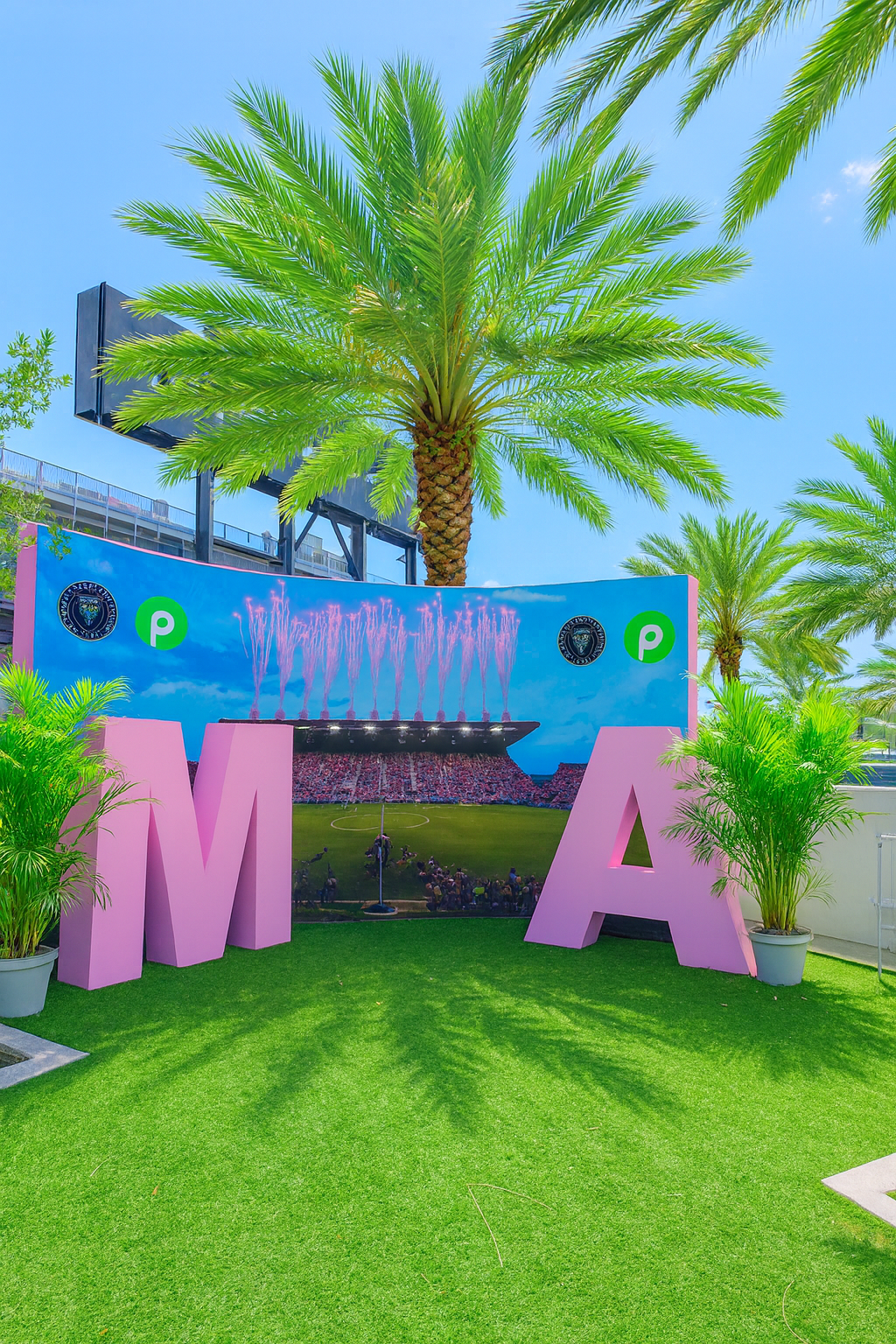
Miami Gardens is central to major sports, entertainment and hospitality programming through Hard Rock Stadium. The stadium offers event spaces for corporate galas, meetings, trade shows, receptions, private dinners and other special programs, including the MIA Event Center and distinctive stadium environments.
Sports-event plant rentals need to be flexible. Sponsor layouts, media zones, hospitality lounges, decks and circulation routes may change between programs. Rolling planters, modular hedge walls and durable tropical plants are more operationally useful than delicate installations that cannot move.
Privacy walls are especially valuable in sporting environments. They can protect athletes, executives, talent, speakers and invited Clients while preserving a polished hospitality aesthetic. Unlike temporary fencing or exposed drape, a well-designed hedge wall contributes positively to the environment while providing visual separation.
Living backdrops can support interviews, sponsor photography and media content. Palms can establish hospitality zones, soften tents and temporary structures, and create a visual relationship with South Florida. The installation should remain secure, accessible and compatible with the venue’s emergency and operational requirements.
Key Biscayne + Coastal Outdoor Plant Rentals
Key Biscayne supports beachfront events, private gatherings, sports hospitality, resort programs, university functions, waterfront dinners and outdoor celebrations. These installations require stronger horticultural and engineering judgment than a standard indoor ballroom rental.
Direct sun can damage sensitive foliage. Wind can destabilize tall plants and hedge walls. Salt-laden air can affect leaves and finishes. Planters may require concealed ballast, and drainage must be managed so that irrigation or rainfall does not create slippery walking surfaces.
Outdoor plant selection should begin with the exact installation location and time of day. A shaded morning event may support different species from a multi-day installation exposed to afternoon sun. A plant selected for an indoor Miami conference should not automatically be moved onto a Key Biscayne lawn simply because it is available.
The visual objective is generally to frame the water, not block it. Palms, grasses, flowering tropicals, woven textures and white or sand-colored planters can reinforce the coastal setting while preserving sightlines.
From Miami to the Florida Keys
The Florida Keys are in neighboring Monroe County rather than Miami-Dade County, but they form a natural extension of Miami’s incentive and destination-meeting corridor. The official Keys meeting-planner resources promote hotels from Key Largo through Key West for meetings, conferences and incentive programs, with spaces ranging from indoor conference venues to waterfront settings.
A Florida Keys live foliage rental should preserve the destination’s relaxed character while maintaining professional event standards. Palms, Monstera, Birds of Paradise, ferns, grasses, flowering tropicals and woven or coastal planters can create an authentic island environment. Behind that appearance are transportation distance, bridge access, limited loading areas, weather exposure, heat, salt, replacement planning and late-night strikes.
For multi-day incentives, plants can move through arrival, general session, waterfront dinner and closing celebration. The same foliage creates continuity while the styling changes according to the program. A Key Largo meeting may feel more resort-driven, while Key West can support a more historic, colorful or Old Florida interpretation.
Miami Event Themes That Need Real Foliage
Miami’s strongest event themes are rooted in the destination. Live foliage gives them credibility because it introduces natural irregularity, texture, scale and movement.
A Miami Vice theme benefits from sculptural greenery rather than botanical excess. Birds of Paradise, Ficus lyrata, Areca Palms, bougainvillea and graphic tropical leaves can be paired with white, black, silver, stone-grey or high-gloss planters. Neon and projection provide energy; foliage prevents the environment from feeling entirely synthetic.
A jungle theme requires layers. Tall palms create the canopy, Monstera and Selloum form the middle level, and ferns complete the ground plane. Hedge walls provide density and conceal venue infrastructure. Natural variation in plant height and direction keeps the installation from looking mechanically repeated.
An enchanted-forest theme calls for Ficus trees, olive trees, ferns, moss, topiaries, grasses, branches and warm light. Living trees create depth that printed forest scenery cannot reproduce. Moss walls and hedge structures can provide architecture without making the environment feel tropical.
A Florida citrus theme can combine citrus trees, herbs, glossy foliage, terracotta or cream vessels, natural wood, white florals and restrained orange or yellow accents. It works especially well for culinary events, spring galas, university celebrations, garden programs and destination hospitality.
An Art Deco theme should use plants graphically. Fan palms, Snake Plants, Birds of Paradise, sculptural Yucca forms, white pebbles, metallic planters and strong symmetry can reflect Miami Beach architecture without resorting to excessive props.
A tropical-modern theme is often the most versatile. It combines premium palms, Ficus lyrata, Monstera, Birds of Paradise and architectural planters with clean spacing and intentional negative space. It feels unmistakably Miami while remaining appropriate for corporate meetings, weddings, hospitality and brand activations.
Hedge Walls + Privacy Walls as Essential Event Infrastructure
Hedge walls and privacy walls are sometimes described as decorative features, but their most important applications are operational. They protect Client privacy, conceal back-of-house areas, separate public and restricted zones, define lounges, manage sightlines and create visual order within temporary environments.
In hotel ballrooms, hedge walls can screen storage, service doors, speaker greenrooms and production areas. At conventions, they can create private meeting rooms, executive hospitality and sponsor activations. At sporting events, they can protect athletes and VIP Participants. At weddings and social events, they can conceal catering operations, form ceremony backdrops or support escort-card displays.
A hedge wall can also serve as a living backdrop. Dimensional logos, signage, florals, lighting, shelving and brand elements can be integrated into the surface. The wall may begin as registration infrastructure and later become a reception photography moment.
Outdoor privacy walls require structural planning. Wind exposure, ballast, internal reinforcement, base dimensions, surface conditions and public safety must be evaluated. The most successful installation appears elegant because the necessary engineering remains discreet.
How to Maximize a Miami Plant Rental Budget
A strong plant rental proposal does not distribute greenery evenly simply to increase quantity. It identifies the places where foliage will be seen most often, photographed most frequently or used to solve an operational challenge.
For most meetings, the priority areas are the general-session stage, main entrance, registration environment and principal hospitality lounge. For trade shows, the priority may shift toward major aisle intersections, sponsor zones and exhibit-floor gathering areas. For weddings, the ceremony, ballroom entrance, sweetheart table, entertainment stage and photography location often provide the greatest return.
Plant height is a major cost factor because taller specimens require more cultivation time, larger nursery containers, larger decorative planters, heavier transportation and additional labor. Planter collection, delivery distance, venue access, overnight labor, outdoor reinforcement, maintenance and repurposing also affect the investment. A transparent proposal should explain these variables rather than presenting one unexplained total.
Repurposing can increase value when it is operationally realistic. Plants may move from registration to a reception or from a ceremony to a ballroom. The move should be scheduled, staffed and mapped in advance. Asking banquet or Client staff to relocate large live plants informally can damage the foliage, planter, floor or event schedule.
Budget-conscious does not mean unstyled. Economical planters, burlap-wrapped options, ferns and carefully selected palms can still create a professional environment when the plants are healthy, correctly scaled, groomed, top-dressed and intentionally placed.
Indoor vs. Outdoor Plant Rentals in Miami
Indoor venues create relatively controlled conditions, but they are not horticulturally neutral. Strong air conditioning, limited natural light, direct stage lighting, heat from production equipment and restricted watering access can affect plant performance during a long conference. Species should be selected according to the duration and actual room conditions.
Outdoor Miami events introduce direct sun, high temperatures, humidity, wind, rain and salt exposure. Planters need sufficient weight and drainage. Hedge walls may require reinforcement. Flowering plants should be selected with the condition of their bloom cycle in mind. Sensitive tropical foliage may require shade or shorter installation periods.
Weather planning should include the plant rental. If an event moves indoors, the foliage must fit through the available entrance and work in the backup room. If rain saturates a lawn, heavy carts may not be able to follow the original route. If strong wind is forecast, a narrow planter or tall wall may need additional ballast or relocation.
A beautiful outdoor rendering is only successful when it can be executed safely in the actual Miami climate.
Live Plants, Faux Greenery + Hybrid Botanical Design
Live foliage should remain the star of a Miami plant rental because it provides natural movement, depth, variation and sensory authenticity. Real leaves interact with light in ways artificial greenery cannot fully reproduce, and living plants create an immediate connection to the destination.
Faux greenery still has an appropriate role. It can be useful for elevated structures, difficult-to-water installations, long-duration outdoor walls, ceiling applications, very dark spaces and architectural forms that living material cannot safely support. High-quality faux hedge walls may also provide consistent privacy when the wall’s structural function is more important than its horticultural identity.
Hybrid design often produces the strongest result. A structurally consistent faux hedge wall can be enhanced with live tropical foliage and fresh florals. Live plants can anchor the floor while faux elements extend overhead. The key is material honesty and quality. Poor artificial greenery can diminish an otherwise premium event, while thoughtful hybrid design can provide both botanical credibility and operational reliability.
Event Plant Rental vs. Office Plant Leasing in Miami
Event plant rentals and office plant leasing are related but distinct services. An event rental is designed for a defined period and often prioritizes immediate visual impact, venue logistics, staging, branding and photography. The plants are delivered, styled, maintained when required and removed after the program.
Office plant leasing and interior landscaping are ongoing services. Species must be selected according to long-term light, air conditioning, human traffic, irrigation, maintenance access and the architecture of the workplace. The planter investment, replacement policy and horticultural service schedule become more important than temporary stage visibility.
Miami hotels, offices, residential developments, medical facilities, universities and corporate headquarters may use both services. A long-term interiorscape creates a consistent biophilic environment, while temporary live foliage rentals support conferences, celebrations, launches and seasonal programs within the same property.
This distinction helps Clients select the appropriate service rather than attempting to make a short-term event package perform as a permanent installation.
Live Foliage, ESG + Post-Event Donation
A live foliage rental is inherently reusable. The same professionally maintained plant can support many meetings and events rather than becoming single-use décor. Reusable planters, carefully managed top dressing and strategic repurposing can further reduce unnecessary material consumption.
Clients seeking a community give-back component may choose to convert selected rental items into a purchase and donate them after the event. Schools, hospitals, nursing homes, nonprofit organizations and community facilities may benefit from appropriate plants when the receiving location, maintenance capability and delivery are coordinated in advance.
Plant donation should not be improvised at strike. The Client should determine which plants are being purchased, where they are going, who will accept them and whether the destination can care for them. Responsible give-back requires logistics as well as intention.
For conferences with ESG or CSR goals, botanical education, native restoration, plant donation, botanical workshops and sustainable planter options can connect the décor with the larger program. The result is stronger when the environmental story is reflected in both the design and the operational choices behind it.
How to Evaluate a Miami Live Foliage Rental Company
A proposal should specify more than a plant name and container size. It should communicate the approximate height, quantity, planter presentation, service dates, delivery, installation, maintenance, strike and any assumptions related to venue access or outdoor conditions.
The company should be able to explain why each plant was selected. A recommendation based only upon current inventory may not serve the Client’s space. The designer should understand stage proportion, attendee circulation, photography, hotel operations, outdoor stability and the relationship among the plants, planters and architecture.
Ask how the plants will be prepared. Healthy, hydrated, groomed and upright foliage should be the baseline. Ask whether the team provides onsite setting and styling or only curbside delivery. Confirm how nursery pots will be concealed and which top dressing is included.
Ask how contracted height is handled. Living material naturally varies, but the Client should not approve an eight-foot specimen and receive a substantially smaller plant without communication. A professional partner should stand behind the approved quantities and specifications.
Venue familiarity matters. Miami’s convention centers, resorts, stadiums, museums, universities, private estates and airport hotels each have different loading procedures and restrictions. The plant rental company should understand freight access, floor protection, security, strike timing and the need to coordinate with the complete production team.
Why Temporary Tropics for Miami Live Foliage Rentals
Temporary Tropics brings more than two decades of live foliage rental experience to Miami meetings, conferences, conventions, hospitality programs, corporate events, sporting events, weddings and social celebrations. Our work combines the horticultural knowledge of a Master Botanist with the operational perspective of a former Executive Meeting Planner.
That combination affects every recommendation. We consider plant health and species performance, but we also consider freight elevators, ballroom turns, stage sightlines, sponsor visibility, outdoor weather, production schedules, Client budgets and the pressure placed upon planners to deliver a seamless experience.
Every Temporary Tropics plant rental is bespoke. We work across a range of budgets and offer Classic, Elevated and Designer planter collections, as well as hedge walls, privacy walls, living backdrops, grand entrances, stage foliage, plant-based floral design and complete biophilic installations.
We guarantee the contracted plant quantities and specifications. Every specimen is inspected and prepared to arrive healthy, hydrated, groomed, upright, clean and presentation-ready. Our teams take pride in organized loading, careful transportation, discreet delivery, professional setting, onsite styling, top dressing, scheduled maintenance, planned repurposing and efficient strike.
For Clients searching for live foliage rentals in Miami, Miami plant rentals, Miami Beach Convention Center plants, conference plant rentals in Brickell, corporate event greenery in Downtown Miami, trade-show plants in Doral, stage foliage in Coral Gables, hedge-wall rentals in Wynwood, luxury plant rentals in Aventura, hospitality plants in Sunny Isles Beach, sporting-event greenery in Miami Gardens, outdoor plant rentals in Key Biscayne or destination plant rentals throughout the Florida Keys, Temporary Tropics provides botanical judgment, event-planning insight and dependable execution.
Frequently Asked Questions About Miami Plant Rentals
How far in advance should I reserve live foliage rentals in Miami?
Early reservation provides the best opportunity to secure specific species, heights, planter collections and installation times. Major conventions, holidays, Art Week programs, sporting events and high-volume weekends can place substantial demand on premium inventory and venue loading schedules. Smaller programs may be accommodated closer to the event date, but bespoke design benefits from sufficient planning time.
Can live foliage be installed at the Miami Beach Convention Center?
Yes. Plant rentals can support stages, registration, exhibit halls, sponsor lounges, hospitality, wayfinding and branded environments at the Miami Beach Convention Center, subject to venue rules and the Client’s approved event plan. Large spaces require appropriately scaled inventory and coordinated loading.
Do you provide stage plant rentals in Miami?
Yes. Stage plant rentals may include palms, specimen trees, ferns, broad-leaf tropical plants, flowering plants, decorative planters and customized botanical groupings. Recommendations are based on stage dimensions, screens, presenter positions, camera views, stairs, accessible routes and audience sightlines.
Can plants be moved from one event to another during the same program?
Yes, when repurposing is planned in advance. The proposal should account for labor, carts, route, timing, planter weight, access and the final design in each location. Large specimens should not be moved informally by attendees or unassigned staff.
Do you offer hedge walls and privacy walls in Miami?
Yes. Temporary Tropics provides hedge walls, privacy walls, living backdrops and custom botanical structures for hotels, conventions, sports hospitality, corporate events, weddings and private programs. Walls may be enhanced with branding, florals, foliage, lighting or signage.
Can live plants be used outdoors in Miami?
Yes, but the plant and planter must be selected for the actual conditions. Direct sun, wind, salt exposure, rain, heat, irrigation and installation duration all influence performance. Tall installations and privacy walls may require concealed ballast or reinforcement.
Are live plant rentals more expensive than faux greenery?
The comparison depends upon scale, duration, structure, quality and labor. Live foliage provides unmatched natural authenticity and is often highly cost-effective for stages, entrances and hospitality environments. Faux greenery may be appropriate for certain walls, overhead applications or long-duration installations. Hybrid design can combine both.
Do you provide office plant rentals and plant leasing in Miami?
Yes. Temporary Tropics supports short-term event plant rentals as well as office plant leasing, interior landscaping and ongoing horticultural maintenance. Permanent and long-term environments are designed according to the building’s light, architecture, air conditioning, maintenance needs and Client objectives.
Can plant rentals support a Miami-themed event?
Yes. Live foliage can support Havana, Miami Vice, Art Deco, jungle, enchanted forest, citrus, tropical-modern, coastal, yacht-club, garden and Florida Keys themes. The species, planter, top dressing, floral accents and lighting are curated to create a sophisticated interpretation rather than generic tropical décor.
What happens to the plants after the event?
Rental plants return to Temporary Tropics for continued horticultural care and future use. Clients may also arrange to purchase selected plants for donation or permanent placement when coordinated in advance.
Miami Is Already Botanical. The Event Should Feel That Way.
Miami’s convention centers, hotels, resorts, museums, gardens, universities, stadiums, warehouses, rooftops and waterfront venues offer dramatically different settings, yet they share one advantage: nature belongs here.
The role of a professional live foliage rental company is not to place the same palms into every room. It is to understand the Client, read the venue, select the correct scale, curate the planter, prepare the plant, coordinate the logistics and style the finished environment so that every botanical element feels intentional.
When live foliage is treated as part of the architecture, it can make a ballroom feel warmer, a stage feel complete, a lounge feel private, a convention feel connected and a temporary installation feel as though it belongs to Miami.
Nature, Curated. Experiences, Elevated.