
The Art of the Harvest: Editorial Florals Designed with Fruits and Vegetables
Some of the most memorable floral arrangements begin outside the traditional vase.
A split pomegranate reveals a jewel-like interior. Grapes spill naturally over the edge of a silver compote. Sculptural cabbages resemble oversized roses. Citrus brings color, fragrance and a sense of place. Peppers create movement with a gesture no manufactured ornament could reproduce.
At Temporary Tropics, we use fresh fruits and vegetables as vessels, structural elements and integral parts of our floral compositions. The approach is imaginative, but it is not new. Artists and designers have long understood the visual power of the harvest.
What makes these arrangements feel modern is how they are edited.
The compositions are abundant without becoming unruly. Floral ingredients are intentionally limited. Color is controlled. Each fruit, vegetable, bloom and botanical element is selected for its form, texture and relationship to the complete tablescape.
The result is fresh in every sense of the word: alive, unexpected, highly visual and designed to be remembered.
Why Fruits and Vegetables Belong in Floral Design
Fruit has appeared in painting, decorative arts, hospitality and ceremonial tables for centuries because it carries both visual and emotional weight.
It represents season, abundance, generosity and place. It also offers something conventional floral materials cannot always provide: recognizable form.
Guests understand the rounded silhouette of an orange, the open architecture of a pomegranate and the generous fall of a cluster of grapes. These familiar elements make a composition feel immediate and approachable, even when the overall design is elevated.
Fresh produce also introduces extraordinary natural color. Instead of trying to match a palette through flowers alone, we can build color through layers of fruit, vegetables, foliage and blooms.
A grapefruit contributes both coral and blush. A pomegranate moves from oxblood to garnet. An aubergine reflects almost black before revealing violet. A green artichoke can bridge foliage and floral material in a single sculptural form.
This is why fruit and vegetable floral arrangements remain timeless. They are grounded in nature rather than a temporary decorative fashion.
A Resourceful Framework for Creativity
Working with produce invites a more imaginative design process.
A fruit or vegetable can become the vessel itself. It can support a single stem, anchor a grouping or create the foundation of a larger tablescape. It may appear whole for sculptural weight, cut open to reveal color or gathered in repetition to create rhythm.
Almost any produce can inspire a floral collection when selected with care:
Oranges, grapefruits and other citrus
Pomegranates
Figs, plums and grapes
Tomatoes and peppers
Artichokes
Pears and apples
Aubergines
Ornamental cabbages and kale
Gourds and squash
Herbs and other edible greenery
The choice is guided by the event’s palette, season, setting and creative direction. For a corporate program, produce can be selected to align with brand colors. For a destination event, it can reference the landscape or culinary identity of the region. For a formal dinner, it can introduce richness and visual depth without relying on an oversized quantity of flowers.
It is a resourceful design framework because every ingredient is asked to perform more than one role. Color becomes structure. Texture becomes movement. The vessel becomes part of the story.
One Collection, Designed Across the Room
Each Temporary Tropics collection can be developed for the different tables and moments within an event.
A long rectangular table may receive a continuous sequence of low arrangements, bud vases, fruit groupings and candlelight. Dining rounds require a composition that reads beautifully from every direction while preserving conversation and sightlines. Highboys benefit from a singular vertical gesture that feels intentional without overwhelming the smaller surface. Low cocktail tables need compact arrangements that leave room for glassware and guest movement.
The same floral language can also be carried into bars, registration desks, lounges, buffets, hospitality suites and other focal points.
The designs do not need to be identical. They need to feel related.
Repeating a particular fruit, flower, color or vessel creates continuity while allowing each arrangement to respond appropriately to its table size and viewing height.
Collection One: Citrus in a Lighter Register
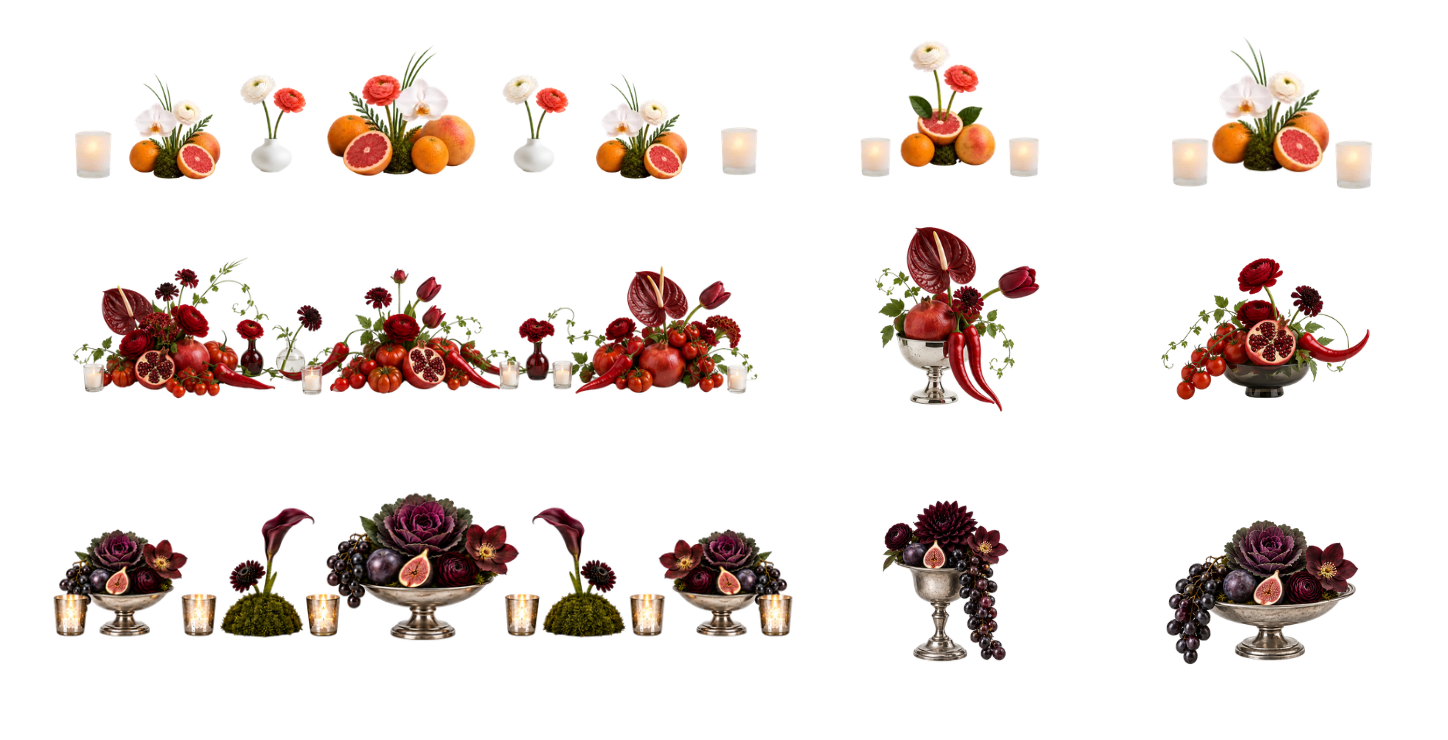
The first collection pairs oranges and grapefruits with white orchids, white and coral-toned blooms, restrained tropical greenery and candlelight.
For the long rectangular table, the design moves in a measured sequence. Low citrus compositions alternate with individual white bud vases and votive candles. Some fruits remain whole for color and weight, while halved grapefruits reveal their soft coral interiors.
The white vessels and flowers create breathing room between the warmer citrus moments. Nothing feels overly dense. The repetition gives the table rhythm while keeping the overall composition light, fresh and conversational.
For dining rounds, highboys and cocktail tables, the citrus elements are gathered into more concentrated arrangements. A grapefruit may become the central vessel for a pair of delicate stems. A larger grouping may combine oranges, grapefruit, moss, an orchid and a few carefully selected blooms.
Why it works: citrus is naturally optimistic, but the restrained floral recipe keeps it sophisticated. The palette feels especially appropriate for Florida hospitality, daytime programs, resort events, spring gatherings and Clients who want color without visual noise.
Collection Two: The Red Harvest
The second collection is unapologetically tonal.
Pomegranates, tomatoes and red peppers are layered with deep red anthuriums, roses, tulips and textural blooms. Small moments of greenery provide movement without interrupting the intensity of the palette.
Across a long rectangular table, the ingredients form a low, sculptural landscape. Produce is arranged in deliberate clusters rather than evenly distributed. Flowers emerge from within the fruit, and slender stems extend outward to prevent the composition from feeling static.
Votive candles add warmth and reflection between the groupings.
For a highboy, the palette becomes more vertical. A silver pedestal vessel elevates pomegranate, anthurium and trailing peppers into a compact statement with a slightly surreal edge. For a dining round or low cocktail table, a darker bowl holds the ingredients closer to the surface, allowing pomegranates, tomatoes and curved peppers to create a richly layered centerpiece.
Why it works: a monochromatic palette allows contrasting forms to become more visible. The smooth skin of a pomegranate, the polished curve of a pepper, the translucency of a tomato and the softness of a rose all register differently, even though they belong to the same color family.
The collection feels bold, modern and editorial—ideal for brand activations, fashion-adjacent events, dramatic dinners, awards programs and corporate identities built around red, burgundy or crimson.
Collection Three: Aubergine, Fig and Silver
The third collection explores the deepest end of the palette.
Dark grapes, figs, plums and aubergine-toned produce are composed with ornamental cabbage, burgundy calla lilies, dahlias, orchids and moss. Aged silver compotes and pedestal vessels introduce a reflective surface that keeps the darker ingredients from feeling heavy.
For the long table, generous silver bowls alternate with smaller moss-based floral moments and warm metallic votives. Grapes trail over the edges of the vessels, while sliced figs reveal lighter interiors that interrupt the deeper field of plum, aubergine and oxblood.
For dining rounds and cocktail tables, the collection becomes a concentrated still life. Ornamental cabbage creates the central floral form, while figs, dark roses and cascading grapes soften the edge of the silver vessel.
The highboy version rises from a slender pedestal compote. Its smaller footprint preserves space on the table, while the trailing grapes and elevated floral crown create a sense of movement.
Why it works: this palette carries the visual richness of an Old Master still life but is presented with a modern editorial hand. The silver vessels create contrast, the moss adds an organic foundation and the restrained flower selection allows the produce to remain integral rather than decorative.
This collection is particularly suited to evening events, fall programs, candlelit dinners, luxury hospitality and brands drawn to burgundy, plum, aubergine or near-black tones.
Why This Approach Feels Premium
Premium floral design is not determined by the number of flowers used.
It is revealed through restraint, proportion, material intelligence and composition.
Fresh fruit and vegetable centerpieces require the designer to think beyond a conventional floral recipe. Every ingredient has a distinct scale, weight, surface and lifespan. Each must be positioned so the arrangement feels natural but not accidental.
The most successful compositions create tension between abundance and control. They may appear effortless, but their balance is carefully constructed.
This approach also gives an event a point of view. Guests have seen flowers in vases. They are less likely to forget a grapefruit holding a delicate ranunculus, a silver compote spilling with grapes and figs or a field of red florals rising from pomegranates and peppers.
The freshness captures attention. The composition holds it.
Tailored to the Brand, Season and Setting
The collections shown are starting points rather than fixed packages.
We can change the produce, floral ingredients, vessels, proportions and color balance. A collection may be adapted to a Client’s brand palette, the season of the event, the culinary program or the architecture of the venue.
Citrus can move from orange and coral into green and yellow. The red collection can deepen toward burgundy or become brighter and more graphic. The aubergine story can incorporate richer plum, black, silver or antique-bronze elements.
We can make the arrangements quieter or more abundant. We can reduce their height for an outdoor dining environment, extend their movement across a long table or simplify the recipe for a smaller cocktail surface.
Every configuration is designed around the way the table will actually be used.
Editorial Floral Design for Events Across Florida
Temporary Tropics creates custom fruit and vegetable floral arrangements for corporate events, conferences, galas, brand activations, hospitality programs and social celebrations throughout Florida.
From long rectangular tables and dining rounds to highboys, cocktail tables, bars and lounge settings, each collection can be carried through the event with continuity and intention.
The ingredients may be familiar. Their composition should be anything but expected.
Nature, Curated. Experiences, Elevated.
To develop a custom harvest-inspired floral collection, connect with Temporary Tropics and share your event date, venue, color palette, table types and creative direction.